




What's Happening?
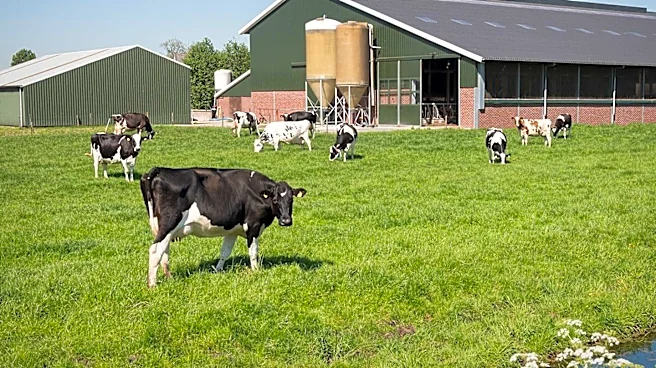
Riverview LLP, a major dairy company in Minnesota, is facing legal challenges from advocacy groups and residents due to its rapid expansion of mega-dairies. The company, which is the second-largest milk producer in the U.S., has been expanding its facilities,
raising concerns about air and water pollution from the large amounts of manure produced. Environmental groups argue that regulators are not adequately addressing the greenhouse gas emissions from these operations. The Minnesota Center for Environmental Advocacy has filed a lawsuit against the Minnesota Pollution Control Agency for issuing a feedlot permit without requiring an emissions reduction plan.
Why It's Important?
The expansion of large-scale dairy operations poses significant environmental challenges, particularly in terms of greenhouse gas emissions and water pollution. Agriculture is a major contributor to emissions in Minnesota, and the lack of stringent regulations on large dairy operations could undermine the state's climate goals. The legal challenges highlight the need for more comprehensive environmental assessments and stricter regulatory oversight to ensure that agricultural practices do not harm local communities and ecosystems.
What's Next?
The lawsuits against Riverview LLP and the Minnesota Pollution Control Agency could lead to changes in how dairy operations are regulated in the state. If successful, these legal actions may result in stricter emissions reporting and reduction requirements for large-scale agricultural operations. The outcome of these cases could also influence similar regulatory practices in other states, potentially leading to more sustainable agricultural practices nationwide.
Beyond the Headlines
The situation underscores the tension between economic growth in the agricultural sector and environmental sustainability. As large dairy operations expand, they can displace smaller farms and alter rural economies. The legal challenges also reflect a growing awareness and activism around the environmental impacts of agriculture, which could drive broader policy changes and encourage more sustainable farming practices.