


What's Happening?
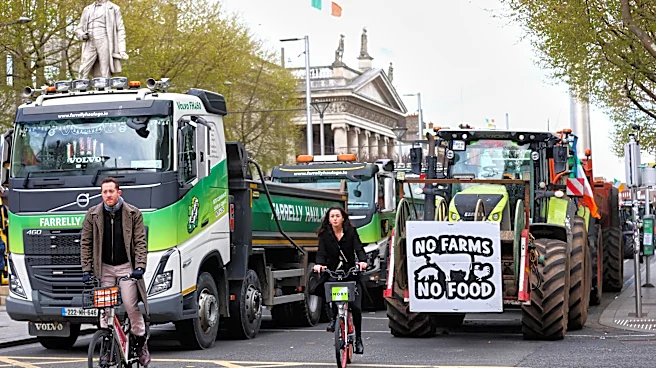
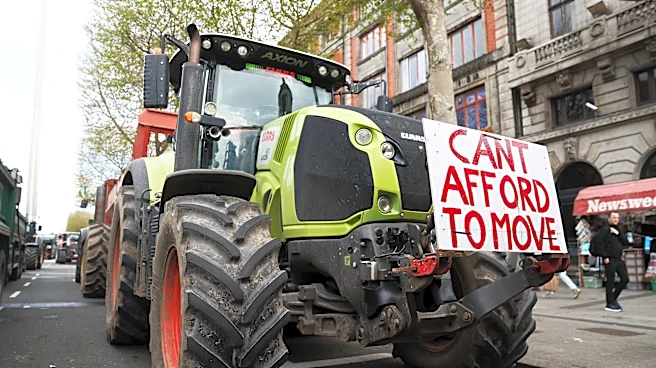
Ireland's government is facing a potential no-confidence vote due to its handling of fuel protests that have disrupted oil supplies and caused significant traffic congestion. Prime Minister Micheál Martin announced tax cuts to address the crisis, which
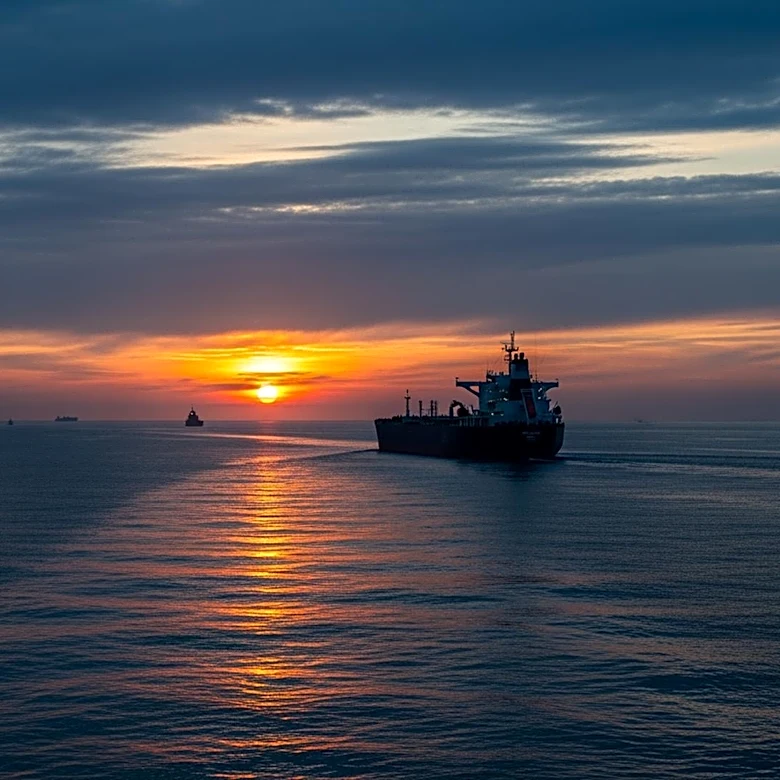
was triggered by the closure of the Strait of Hormuz following the U.S.-Israel war on Iran. Opposition parties, including Sinn Fein, criticized the government's delayed response and inadequate aid measures. Martin's coalition government scheduled a vote of support that could nullify the no-confidence motion if passed.
Why It's Important?
The situation highlights the political instability in Ireland, as the government struggles to manage the economic fallout from international conflicts affecting oil supply. The protests underscore the public's dissatisfaction with rising fuel costs and the government's response. If the no-confidence vote succeeds, it could lead to a change in leadership or a general election, impacting Ireland's political landscape and its approach to economic challenges.
What's Next?
The government is expected to continue negotiations with opposition parties to secure support and avoid the no-confidence vote. The outcome of the scheduled vote of support will be crucial in determining the government's future. Stakeholders, including businesses and civil society groups, are likely to react to the government's handling of the crisis and its implications for Ireland's economic stability.