



What's Happening?
Kazakhstan has formally requested Russia's permission to resume oil exports to Germany through the Druzhba pipeline and is currently awaiting a response, according to Kazakh energy minister Erlan Akkenzhenov. Akkenzhenov confirmed on Wednesday that Kazakhstan possesses
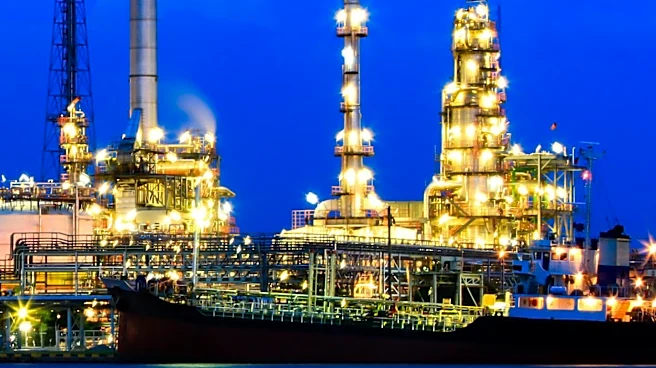
the necessary technical capabilities to restart these exports via the pipeline, which traverses Russian territory. Earlier in April, Russia had redirected Kazakh crude destined for Germany to alternative export routes, citing technical constraints as the reason for avoiding the Druzhba pipeline. Germany's Schwedt refinery, a crucial supplier of fuel to Berlin, partially relies on Kazakh crude delivered through this pipeline. Kazakhstan anticipates its oil production to reach 96 million metric tons in 2026 and projects an increase to 99 million metric tons in 2027.
Why It's Important?
The potential resumption of Kazakh oil exports to Germany via the Druzhba pipeline is significant for European energy security, particularly for Germany, which has been seeking to diversify its energy sources away from direct Russian supplies. The Schwedt refinery's reliance on Kazakh crude highlights the interconnectedness of regional energy infrastructure and the impact of geopolitical decisions on national energy supplies. Russia's decision to redirect crude earlier in the year underscored its leverage over transit routes. A positive response from Russia would indicate a willingness to facilitate energy flows to Europe, potentially easing some of the energy supply concerns. Conversely, a denial could further strain energy relations and compel Germany to seek more costly or less reliable alternatives, impacting its industrial and economic stability.
What's Next?
Kazakhstan is currently awaiting Russia's decision regarding the resumption of oil exports through the Druzhba pipeline. The outcome of this request will directly influence Germany's energy supply strategy and its efforts to secure non-Russian crude. If Russia grants permission, it could signal a pragmatic approach to energy transit, potentially stabilizing regional oil markets. If denied, Germany will likely intensify its efforts to secure crude from other sources, which could involve higher transportation costs and logistical challenges. The situation also highlights Kazakhstan's role as a key energy producer in Central Asia and its strategic position in supplying oil to European markets, subject to Russian transit approvals. Future developments will depend on Russia's geopolitical considerations and its energy policy objectives.
Beyond the Headlines
This situation underscores the complex geopolitical dynamics of energy transit in Eurasia. The Druzhba pipeline, a legacy of the Soviet era, remains a critical artery for oil flow to Europe, giving Russia significant control over energy supplies from Central Asian producers like Kazakhstan. The request from Kazakhstan to resume exports via this route, despite Russia's previous redirection, illustrates the ongoing reliance on existing infrastructure and the challenges of bypassing established transit networks. This scenario also highlights the broader European strategy to reduce dependence on Russian energy while still needing to ensure stable supplies. The decision by Russia will not only impact immediate oil flows but also serve as a barometer of its willingness to cooperate on energy matters with European nations, even amidst broader geopolitical tensions.