
What's Happening?
President Donald Trump is set to travel to Dover Air Force Base in Delaware to attend a dignified transfer ceremony for two Iowa National Guard members who were killed in an attack in Syria. The soldiers,
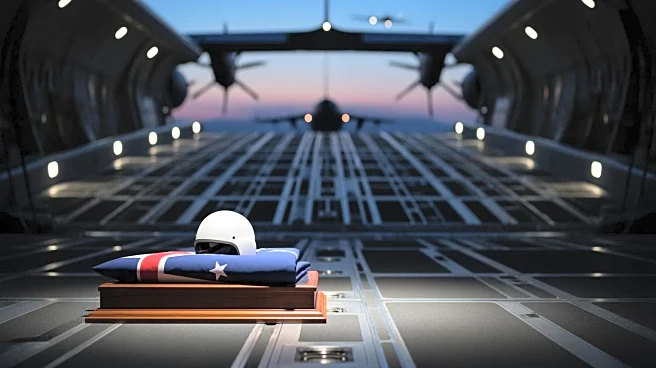
Sgt. Edgar Brian Torres-Tovar and Sgt. William Nathaniel Howard, were part of the 1st Squadron, 113th Cavalry Regiment. A U.S. civilian interpreter, Ayad Mansoor Sakat, was also killed in the attack. The dignified transfer is a solemn military ritual where the remains of fallen service members are returned to U.S. soil. President Trump has described witnessing these ceremonies as one of the toughest duties of his presidency. The attack, which also injured three other Iowa National Guard members, is testing the relationship between the U.S. and Syria, as the U.S. continues its efforts against the Islamic State group in the region.
Why It's Important?
The deaths of the Iowa National Guard members highlight the ongoing risks faced by U.S. military personnel deployed overseas, particularly in conflict zones like Syria. The dignified transfer ceremony underscores the sacrifices made by service members and the impact on their families and communities. This event also brings attention to the U.S.'s military involvement in Syria and its strategic partnerships in the fight against ISIS. The presence of President Trump at the ceremony signifies the importance of honoring fallen soldiers and may influence public perception of U.S. military engagements abroad. Additionally, the incident could affect U.S. foreign policy and military strategy in the Middle East, particularly in relation to its alliances and operations against terrorist groups.
What's Next?
Following the dignified transfer, the remains of the fallen soldiers will be transported to their final resting places. The U.S. military and government may conduct further investigations into the attack to understand the circumstances and prevent future incidents. There could be discussions within the U.S. government and military about the current strategy in Syria and the broader Middle East. The incident may prompt calls for reassessment of U.S. military presence and operations in the region. Additionally, there may be diplomatic engagements with Syrian leadership to address security concerns and strengthen cooperation against ISIS.