
What's Happening?
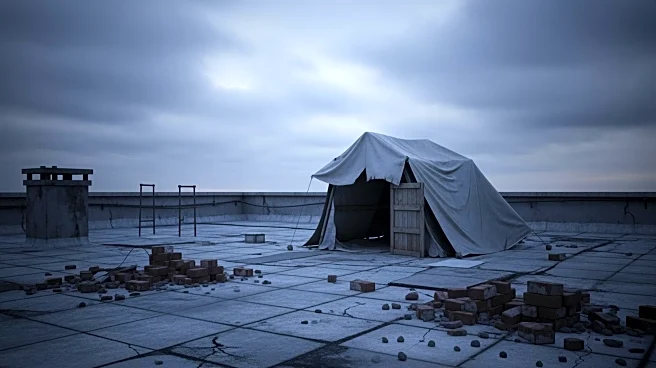
Palestinians in Gaza are facing severe challenges this winter due to the destruction of over 400,000 homes from ongoing conflict. The Palestinian Civil Defense has urged residents to evacuate damaged buildings during heavy rains, but many have no alternative
but to remain in unsafe structures. Torrential rains and floods have recently claimed the lives of at least 17 people, including children, and have caused significant damage to more than 90 residential buildings. Approximately 90% of shelters for displaced individuals have been flooded, leaving many without adequate protection from the elements. The United Nations reports that 1.3 million Palestinians urgently need shelter, but aid efforts are hindered by restrictions on direct aid delivery to Gaza.
Why It's Important?
The humanitarian crisis in Gaza highlights the urgent need for international intervention and support. The lack of adequate shelter and resources poses a significant threat to the safety and well-being of the Palestinian population, particularly during harsh winter conditions. The inability to provide sufficient aid exacerbates the suffering of displaced families, increasing the risk of fatalities due to exposure and building collapses. This situation underscores the broader geopolitical tensions in the region and the critical need for a resolution that ensures the safety and dignity of affected communities.
What's Next?
International organizations, including the United Nations, are calling for increased aid access to Gaza to address the shelter crisis. The Israeli agency COGAT has facilitated the entry of tents, tarpaulins, and warm clothing, but more comprehensive aid is needed. The ongoing conflict and political barriers continue to complicate relief efforts, necessitating diplomatic engagement to secure humanitarian assistance. The situation demands urgent attention to prevent further loss of life and to provide sustainable solutions for displaced populations.
Beyond the Headlines
The crisis in Gaza reflects deeper issues related to the long-standing conflict between Israel and Palestine. The destruction of homes and infrastructure not only impacts immediate survival but also affects long-term recovery and stability in the region. The psychological toll on residents, particularly children, living in constant fear and uncertainty is profound. Addressing these challenges requires a multifaceted approach that includes political dialogue, humanitarian aid, and efforts to rebuild and restore communities.