








What's Happening?
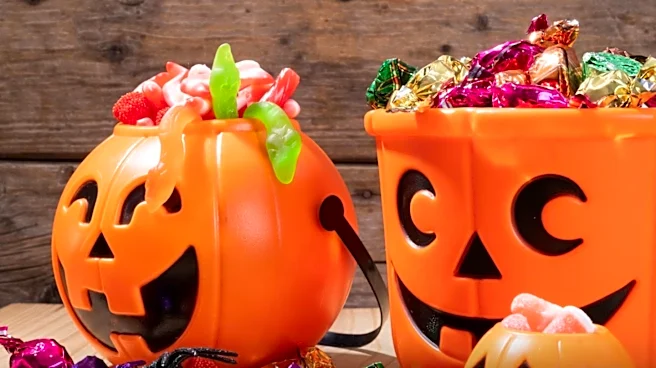
Consumers are facing significantly higher prices for Halloween candy this year, with candy and gum prices increasing by 7.7% over the past year and more than 18% over two years, exceeding the average food inflation rate. This surge is largely attributed
to increased chocolate costs, driven by poor cocoa harvests in West Africa due to drought and heavy rains. Although global cocoa production is now rebounding, the chocolate currently on shelves was made with cocoa purchased in 2025 when prices were high. Manufacturers are also contending with elevated costs for other ingredients like sugar, increased fuel expenses due to international conflicts, and higher import tariffs. Despite these price hikes, the National Retail Federation estimates that consumers will spend a record $13.5 billion on Halloween this year, a 3% increase from last year, with an average spending of $115 per person.
Why It's Important?
The rising cost of Halloween candy reflects broader inflationary pressures impacting U.S. consumers and the food industry. The increased prices for cocoa, sugar, and fuel, along with tariffs, highlight the vulnerability of supply chains to global weather patterns and geopolitical events. This situation forces candy manufacturers to either absorb higher costs, pass them on to consumers, or innovate with less expensive ingredients, as seen with the introduction of more gummy and sour candies. While consumer demand for chocolate remains strong, shoppers are purchasing less of it, indicating that they are paying more for smaller quantities. This trend could lead to shifts in consumer purchasing habits and product offerings within the confectionery market, potentially impacting smaller businesses like Enna Chocolate, which faces significant tariff costs on packaging and ingredients.
What's Next?
While global cocoa production is recovering, consumer chocolate prices are expected to remain 'sticky,' meaning they will not immediately decrease due to the lag in production and manufacturers' ongoing higher costs for other inputs. Candy makers may continue to explore alternatives to chocolate or introduce new product lines that are less reliant on expensive cocoa. Consumers should anticipate sustained higher prices for chocolate-based Halloween treats in the near future. The National Retail Federation's projections suggest that despite the increased costs, consumer spending on Halloween will continue to rise, indicating a strong cultural commitment to the holiday. However, individual purchasing decisions may shift towards non-chocolate options or smaller quantities of premium chocolates.
Beyond the Headlines
The current candy price surge underscores the complex interplay of global agricultural supply, international trade policies, and consumer economics. The 'stickiness' of consumer prices, even when raw material costs decline, highlights how manufacturers manage profit margins and production cycles. This situation also brings to light the challenges faced by small businesses in adapting to fluctuating input costs and tariffs, potentially impacting their ability to plan and source materials efficiently. The shift towards non-chocolate candies could represent a long-term change in consumer preferences or a temporary adaptation to economic pressures, influencing future product development and marketing strategies within the confectionery industry. The resilience of Halloween spending despite economic headwinds also points to the cultural significance of the holiday in the U.S.