







What's Happening?
The Jewish Museum in New York has launched an initiative to lend Jewish ceremonial art to museums across the United States. This effort aims to integrate Jewish artifacts into broader cultural contexts rather than isolating them in Judaica galleries.
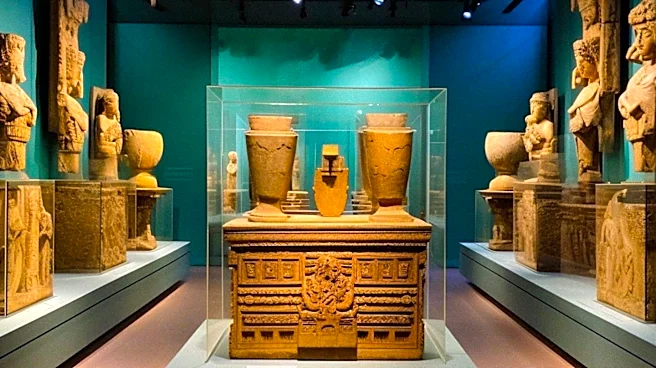
The initiative, led by James Snyder, the museum's director, seeks to highlight the global diaspora of Jewish culture by placing items like an Iraqi menorah in Middle Eastern galleries and a German Torah crown among European decorative arts. This approach is intended to demonstrate the historical and cultural interactions of Jewish communities with their surroundings. Museums such as the Cleveland Museum of Art and the Toledo Museum of Art have already participated, displaying items like a 12th-century Afghan kiddush cup and a 13th-century synagogue inscription from Cairo. The initiative has been well-received, with increased visitor interest and engagement.
Why It's Important?
This initiative addresses a significant gap in the representation of Jewish ceremonial art in major U.S. museums, which often lack such collections despite their comprehensive displays of other world cultures. By integrating Jewish artifacts into existing galleries, the initiative not only enriches the narrative of these museums but also fosters a deeper understanding of Jewish history and its interactions with other cultures. This effort is particularly timely given the current socio-political climate, where museums face pressure to address cultural and historical narratives more inclusively. The initiative also serves as a model for how culturally specific museums can engage with broader audiences and contribute to a more nuanced understanding of global history.
What's Next?
The Jewish Museum plans to continue expanding this initiative, potentially reaching more museums across the country. As interest grows, other institutions may seek to collaborate, further diversifying their collections and narratives. This could lead to a broader reevaluation of how museums curate and present cultural artifacts, encouraging more inclusive and integrated displays. Additionally, the initiative may inspire similar efforts by other culturally specific museums, promoting a more interconnected approach to cultural heritage.