







What's Happening?
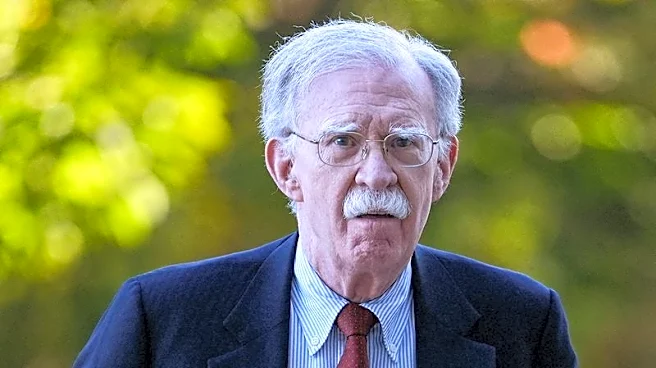
The Wall Street Journal's editorial board has criticized President Trump's administration for its legal actions against former National Security Adviser John Bolton. Bolton, who served under Trump, is facing charges related to the mishandling of classified
documents while preparing his memoir, 'The Room Where It Happened.' The editorial describes the administration's efforts as 'especially troubling and truly vindictive.' Bolton has reportedly reached a tentative plea deal, agreeing to plead guilty to a single felony count of illegal retention of sensitive national security documents and to pay a fine exceeding $2 million. This plea deal is pending approval by a judge, with a re-arraignment hearing scheduled for June 26. The Journal argues that the legal battle has placed Bolton in a difficult position, potentially costing him up to $3 million in legal fees if he chose to defend himself at trial.
Why It's Important?
The case against John Bolton highlights ongoing tensions between President Trump and former officials who have become critics. The editorial suggests that the administration's actions may be motivated by personal vendettas rather than legal necessity, raising concerns about the use of prosecutorial power for political retribution. This situation underscores broader issues of how classified information is handled and the potential consequences for those who publish memoirs or other works critical of sitting administrations. The outcome of Bolton's case could set a precedent for how similar cases are handled in the future, impacting authors, journalists, and public officials who engage in public discourse about their government service.
What's Next?
Bolton's plea deal is expected to be finalized at a re-arraignment hearing on June 26. If approved, it could conclude the legal proceedings against him, though it may not end the public debate over the administration's motivations and the implications for free speech and whistleblowing. The case may also influence how future administrations handle similar situations, potentially leading to calls for clearer guidelines on the publication of sensitive information by former government officials. Additionally, the case could prompt discussions about the balance between national security and the public's right to know.