

What's Happening?
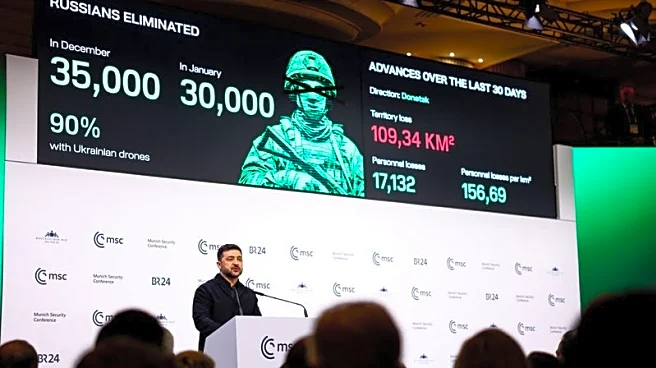
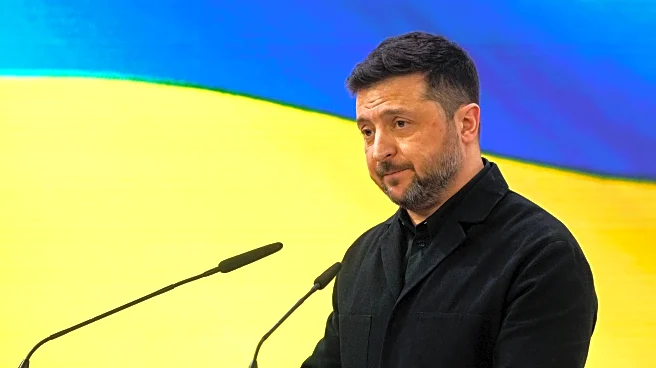
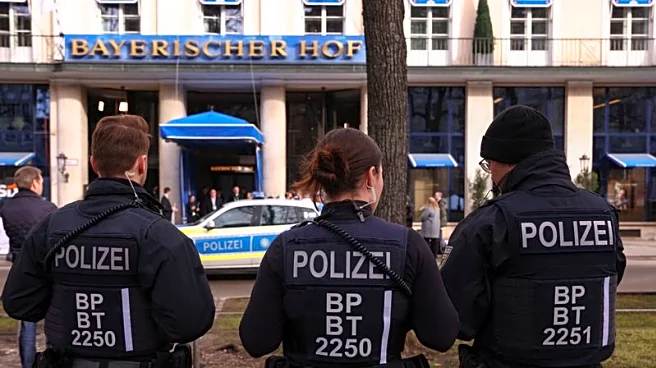
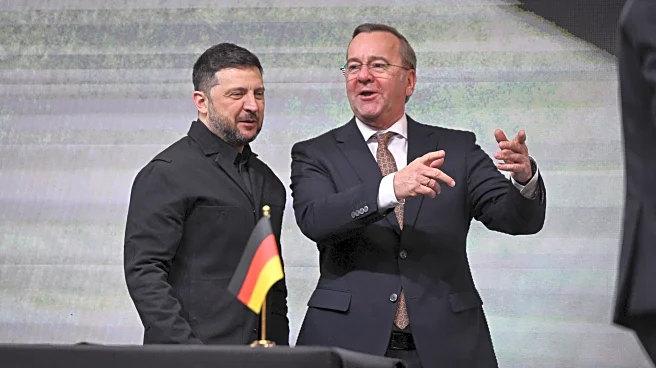
During the Munich Security Conference, Ukrainian President Volodymyr Zelensky emphasized that territorial concessions by Ukraine would not lead to peace, drawing parallels to the 1938 Munich Agreement. Zelensky highlighted the ongoing peace talks involving
Moscow, Kyiv, and Washington, where Russia demands Ukraine's withdrawal from parts of Donetsk Oblast. The U.S. has proposed a 15-year security guarantee as part of a peace deal, but Ukraine is seeking a minimum of 20 years. Zelensky criticized the absence of Europe in the negotiations and stressed the importance of European involvement. He also mentioned the Prioritized Ukraine Requirements List (PURL) agreement, signed by the U.S. and NATO, which facilitates the purchase of high-priority equipment for Ukraine. Zelensky expressed gratitude for the €38 billion in military aid confirmed during a recent meeting.
Why It's Important?
The outcome of these negotiations could significantly impact the geopolitical landscape in Europe and the security dynamics between NATO and Russia. Ukraine's insistence on extended security guarantees reflects its strategic need for long-term stability and protection against future aggression. The involvement of European nations in the peace process is crucial for ensuring a balanced approach that considers the interests of all stakeholders. The PURL agreement and the substantial military aid underscore the commitment of NATO and its allies to support Ukraine's defense capabilities. The negotiations' success or failure could influence the broader security architecture in Europe and the future of U.S.-Russia relations.
What's Next?
The next steps involve continued trilateral discussions, with Ukraine hoping for a favorable outcome that includes extended security guarantees. The U.S. administration and Congress will play a critical role in determining the final terms of the agreement. The potential hardening of Russia's stance, indicated by the appointment of Vladimir Madinsky to the negotiating team, suggests that the talks may face significant challenges. The involvement of European nations in the negotiations could be a pivotal factor in reaching a comprehensive and lasting peace agreement.
Beyond the Headlines
The negotiations highlight the complex interplay between historical precedents and contemporary geopolitical challenges. Zelensky's reference to the Munich Agreement serves as a cautionary tale against appeasement, emphasizing the need for a robust and enforceable peace deal. The discussions also reflect the broader struggle for influence in Eastern Europe, with Ukraine positioned as a critical buffer state between NATO and Russia. The outcome of these talks could set a precedent for future conflict resolution efforts in the region.