






What's Happening?
Illinois agriculture has evolved significantly, moving from diversified subsistence farming to a highly specialized system dominated by corn and soybeans. This transformation was driven by several factors, including the invention of John Deere's steel
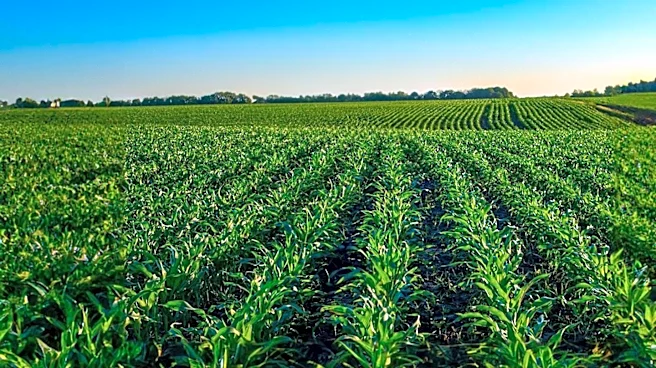
plow in 1837, which enabled large-scale prairie conversion, and the expansion of railroads in the 1850s, facilitating crop transport. Post-World War II modernization introduced chemical fertilizers and pesticides, further increasing efficiency but also leading to a decline in farm diversity. Federal agricultural policies, particularly since the 1980s, have heavily influenced this specialization. Policies like the Agricultural Adjustment Act of 1933 and subsequent farm bills have provided subsidies and crop insurance tailored for commodity crops, encouraging farmers to maximize yields of corn and soybeans. Currently, 22 million of Illinois's 23 million acres of cropland are dedicated to these two crops, primarily for livestock feed and ethanol production.
Why It's Important?
The historical trajectory of Illinois agriculture, leading to a 'corn-soybean desert,' has profound implications for the U.S. food system and environment. The reliance on monoculture farming, heavily supported by federal subsidies and crop insurance, discourages diversification and sustainable practices like cover cropping or habitat restoration. This system contributes to environmental issues such as soil degradation, loss of biodiversity, and increased carbon footprint due to the energy-intensive production of fertilizers and ethanol. Economically, it creates a dependency on commodity prices and federal support, making farmers vulnerable to market fluctuations and policy changes. The current system, while efficient in producing high volumes of specific grains, raises questions about long-term food security, ecological resilience, and the economic viability of diversified farming models in the U.S.
What's Next?
The current agricultural landscape in Illinois, characterized by extensive corn and soybean cultivation, faces increasing scrutiny due to environmental concerns and the impact of global events like rising fuel and fertilizer costs. There is a growing debate about whether this specialized system is sustainable in the long term, especially in the face of climate change and the precipitous loss of native ecosystems. Discussions around future farm bills and agricultural policies are likely to explore alternatives that promote diversity, ecological health, and economic resilience for farmers. This could involve re-evaluating subsidy structures, encouraging diversified crop rotations, and supporting practices that enhance soil health and reduce environmental impact. The political will to enact such changes will be crucial, as will consumer demand for more sustainable food systems.
Beyond the Headlines
The historical development of Illinois agriculture highlights a broader national trend where policy and technological advancements have shaped farming practices, often at the expense of ecological diversity and long-term sustainability. The 'corn-soybean desert' metaphor points to a systemic issue where economic incentives and market demands have prioritized volume over variety and environmental health. This has ethical implications regarding land stewardship and the responsibility to future generations. Culturally, it reflects a disconnect between food production and its ecological consequences. Addressing this requires not just policy changes but a fundamental shift in how society values food, land, and the role of farmers. It also brings into focus the power dynamics between large agricultural corporations, federal agencies, and individual farmers, and the need for a more equitable and sustainable agricultural paradigm.