






What's Happening?
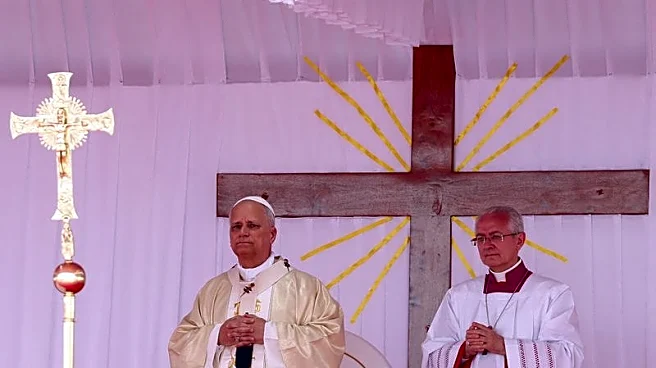
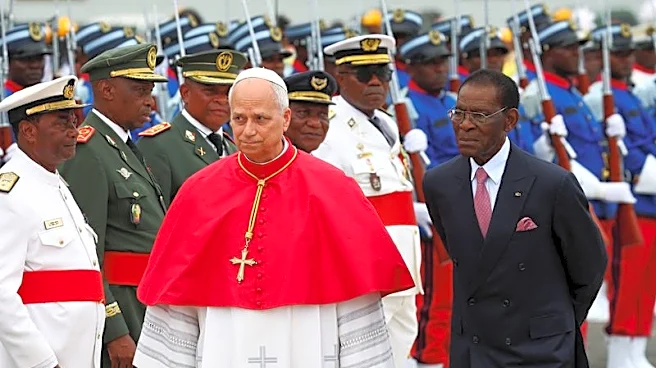
Pope Leo XIV has arrived in Equatorial Guinea, marking the first papal visit to the country since 1982. During his visit, the Pope criticized the 'colonization' of Africa's mineral resources and the 'lust for power' in a nation led by President Teodoro
Obiang Nguema Mbasogo, who has been in power since 1979. The Pope's remarks highlight the economic inequalities exacerbated by the global pursuit of profit, particularly in resource-rich regions. Equatorial Guinea, despite its oil wealth, remains plagued by poverty and corruption, with revenues largely benefiting the ruling elite.
Why It's Important?
The Pope's visit and his statements draw international attention to the ongoing issues of resource exploitation and governance in Africa. His criticism of economic inequalities and the exploitation of mineral resources resonates with broader global concerns about sustainable development and ethical governance. The visit underscores the Catholic Church's role in advocating for social justice and human dignity, potentially influencing public opinion and policy in both Equatorial Guinea and the international community.
What's Next?
Following the Pope's visit, there may be increased pressure on the Equatorial Guinean government to address issues of corruption and inequality. The international community, including human rights organizations, may use the Pope's statements to advocate for reforms. Additionally, the visit could strengthen the Catholic Church's influence in the region, encouraging local communities to push for change. The Pope's ongoing tour of Africa may continue to highlight similar issues in other countries, fostering a broader dialogue on resource management and governance.
Beyond the Headlines
The Pope's visit also raises questions about the role of religious institutions in political and economic discourse. While the Church traditionally focuses on spiritual matters, its involvement in social justice issues highlights the intersection of faith and politics. This visit may prompt discussions on the ethical responsibilities of religious leaders in addressing global challenges, such as poverty, inequality, and environmental sustainability.