







What's Happening?
The eviction of 87-year-old disabled woman Maricarmen from her Madrid flat, where she had lived for 71 years, has sparked widespread outrage and mass housing protests across Spain. Maricarmen was forcibly removed by riot police after her rent was increased
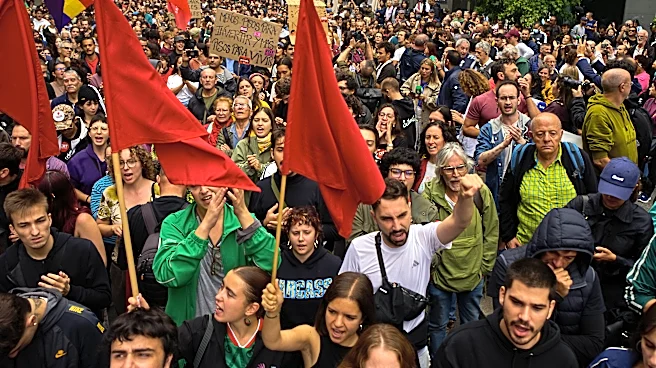
by over 400% by investment fund Urbagestion, making it unaffordable on her limited pension. Images of her eviction, carried out on September 23, led to protests in cities nationwide, including a march of up to 300,000 people in Madrid and protest encampments in Puerta del Sol. The incident has intensified calls for stronger protections against speculative investment and rising rents. In response to the public outcry, Urbagestion has now stated Maricarmen can return to her home under her old rent. The protests have also highlighted the failure of emergency housing reforms in Congress, as two government decrees aimed at extending tenant protections and capping rent increases were rejected.
Why It's Important?
This event underscores the severe housing crisis in Spain, where housing is increasingly treated as a commodity for profit, leading to unaffordable rents and evictions. The mass public response, including large-scale protests and encampments, demonstrates significant societal discontent with current housing policies and the impact of speculative investment funds. The incident has forced a retreat from the landlord and spurred limited reforms, but activists are demanding more fundamental changes, such as a ban on 'vulture funds' and stronger protections for vulnerable individuals. The failure of the government's proposed housing reforms in Congress highlights political divisions and the challenges in addressing the crisis through legislative means. This situation could serve as a catalyst for broader social and political movements, potentially influencing future housing policies and the regulation of investment in residential property across Europe.
What's Next?
Protests sparked by Maricarmen's eviction are continuing across Spain, with housing groups organizing demonstrations in dozens of cities and demanding stronger protections against speculative investment and rising rents. The Madrid Tenants Union has drafted a 'Maricarmen decree' calling for a ban on 'vulture funds,' a law against evicting vulnerable individuals without alternative housing, further curbs on price rises, a rent freeze, and automatic renewal of leases, demanding its full implementation. Discussions in protest encampments are moving towards more fundamental changes, with calls to expropriate 'vulture funds' and even Maricarmen's building. The defeat of the government's housing reform decrees in Congress has dealt a blow to the current administration, intensifying calls from the opposition for early elections. The ongoing public pressure and activism will likely continue to push for more comprehensive and tenant-friendly housing policies.
Beyond the Headlines
The eviction of Maricarmen and the subsequent protests reveal a deeper systemic issue of housing financialization, where housing markets are increasingly decoupled from wages and workers' ability to pay. This trend, exacerbated by government policies following the 2008 financial crisis, has transformed housing into a primary outlet for global capital seeking investment, leading to high housing costs and insecurity. The movement's demands for expropriating corporate landlords and nationalizing banks suggest a radical shift in perspective, challenging the fundamental capitalist approach to housing. The parallels drawn with housing struggles in other European countries like Germany and Britain indicate a continent-wide crisis and a growing potential for coordinated tenant movements. This situation raises ethical questions about the right to housing, the role of the state in protecting vulnerable citizens, and the balance between property rights and social welfare.