
What's Happening?
In January 2025, President Trump issued an executive order that froze foreign aid for 90 days, followed by a significant reduction of 83% in U.S. Agency for International Development (USAID) programs. This decision has had a profound impact on Jewish
humanitarian aid and international development organizations, which are still grappling with the consequences a year later. These organizations, along with their non-Jewish counterparts, are facing challenges in adapting to the reduced funding. According to Dyonna Ginsburg, CEO of OLAM, a network of Jewish organizations involved in international aid, the effects of these cuts are still unfolding. Alternative funders, including those affiliated with the United Nations, have attempted to fill the gap left by USAID, but have been unable to fully compensate for the loss. As a result, grants to international aid organizations are being canceled, and private philanthropy is struggling to meet the shortfall.
Why It's Important?
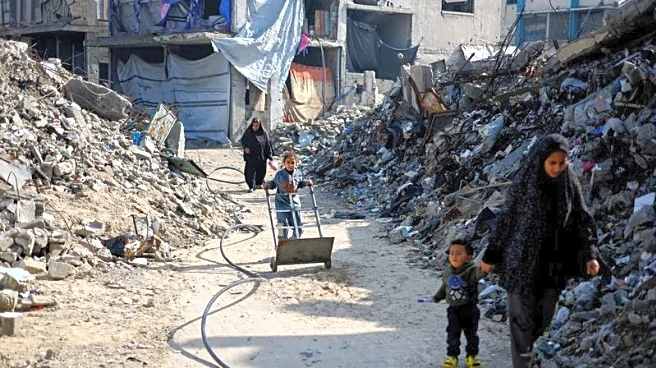
The reduction in U.S. foreign aid has significant implications for global humanitarian efforts, particularly for Jewish organizations that rely on these funds to support vulnerable populations worldwide. The cuts have forced these organizations to seek alternative funding sources and adapt their strategies to continue their work. The situation highlights the critical role of government funding in supporting international aid and the challenges faced by private philanthropy in filling the gap. The impact of these cuts extends beyond the Jewish community, affecting global efforts to address poverty, health, and development issues. The need for international aid continues to grow, and the reduction in U.S. support places additional pressure on other countries and private donors to step up their contributions.
What's Next?
In response to the funding cuts, some former USAID employees, including Ariella Bock, have founded organizations like Aid on the Hill to advocate for foreign assistance. These groups are lobbying Congress to approve a bill that would allocate $50 billion to the State Department for foreign aid. The future of U.S. international aid remains uncertain, but efforts are underway to restore funding and support for humanitarian initiatives. The outcome of these advocacy efforts will be crucial in determining the level of U.S. involvement in global aid and development in the coming years.