






What's Happening?
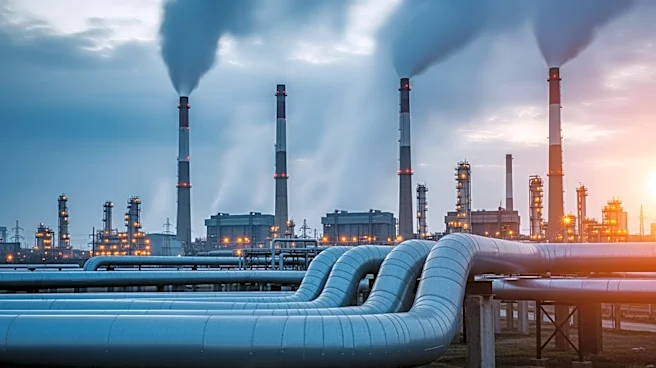
China is reviving a multibillion-dollar coal gasification project, known as the Fuxin project, which was initially launched in 2011 by the state-owned China Datang Corp. The project, estimated at $3.7 billion, was halted in 2014 due to technical, environmental,
and market challenges. Recent global gas supply disruptions, partly due to geopolitical tensions involving the U.S. and Israel's conflict with Iran, have prompted Chinese officials to restart the project. Reports indicate that construction resumed last fall, with plans to bring the plant online by October. This initiative is part of a broader strategy, with China planning up to 13 coal-to-gas projects, potentially increasing synthetic gas production to 12% of the country's current supply.
Why It's Important?
The revival of the Fuxin project highlights China's strategic response to global energy supply challenges, particularly in the context of geopolitical tensions affecting gas supplies. By increasing its synthetic gas production capacity, China aims to enhance its energy security and reduce reliance on external gas sources. This move could have significant implications for global energy markets, potentially affecting gas prices and supply dynamics. Additionally, the project underscores China's continued reliance on coal, even as it invests in renewable energy, reflecting the complex balance between economic growth and environmental considerations.
What's Next?
As China progresses with the Fuxin project and other coal-to-gas initiatives, it may face international scrutiny over its environmental impact and carbon emissions. The success of these projects could influence China's energy policy and its role in global energy markets. Stakeholders, including environmental groups and international energy agencies, will likely monitor these developments closely. The outcome could also affect China's diplomatic relations, particularly with countries advocating for reduced coal usage and increased renewable energy adoption.