


What's Happening?
Negotiations for a global plastics treaty have stalled, with the next formal session, INC-5.4, now scheduled for March 13-24, 2027, at an unannounced venue. The previous session, INC-5.2, concluded in August 2025 without consensus, and the chair, Luis
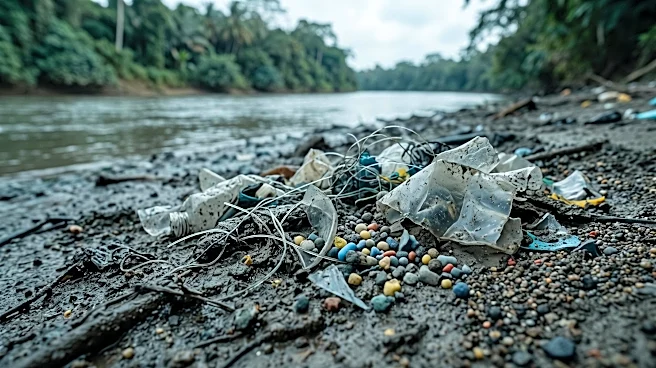
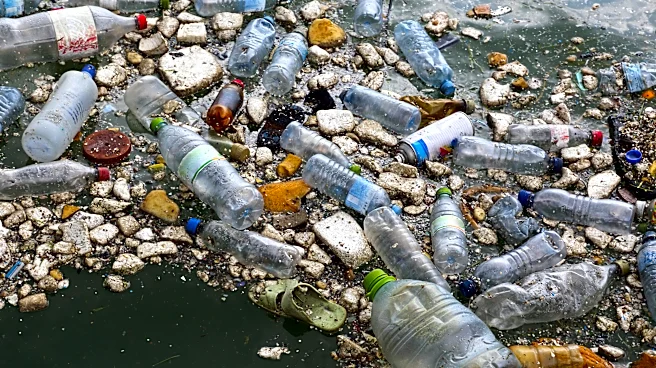
Vayas Valdivieso of Ecuador, resigned in October 2025. Chile’s Julio Cordano was elected as the new chair in February 2026. A core disagreement persists: approximately 70 countries in the High Ambition Coalition advocate for binding limits on plastic production and bans on toxic plastics, while a smaller group of oil-producing nations favors a treaty focused primarily on waste management. Cordano's August 2026 draft for negotiations notably omits production limits, chemical controls, and finance provisions. Informal meetings have taken place, including heads of delegation talks in Nairobi in July 2026 and closed-door discussions in Bangkok in September 2026, with another informal round planned for January 2027. The delay significantly impacts regions like Southeast Asia, which is a major contributor to riverine plastic emissions into the ocean.
Why It's Important?
The prolonged delay in establishing a legally binding global plastics treaty has significant implications for environmental health, economic stability, and international cooperation. Without a unified international framework, individual nations, particularly those in Southeast Asia, are left to implement their own, often disparate, regulations. This patchwork approach can be less effective in addressing a global issue like plastic pollution, as packaging and waste frequently cross national borders. The absence of production limits in the current draft is a major concern for environmental advocates and the High Ambition Coalition, as it suggests a continued focus on managing existing waste rather than preventing its creation. Economically, countries like Malaysia, the Philippines, and Thailand are estimated to lose billions annually due to discarded single-use plastics, highlighting the financial burden of inadequate recycling infrastructure and the lack of a global funding mechanism for collection systems in lower-income countries. The ongoing negotiations underscore a fundamental tension between environmental protection and economic interests, particularly those of oil producers.
What's Next?
The immediate next step is the informal round of talks scheduled for January 2027, followed by the formal INC-5.4 session in March 2027, where the chair aims to adopt a treaty. However, the lack of an agreed venue for INC-5.4 suggests potential for further scheduling adjustments. Key stakeholders, including the High Ambition Coalition, will likely continue to push for the inclusion of binding production limits and chemical controls, which are currently absent from the draft. Oil-producing nations are expected to maintain their focus on waste management solutions. For companies operating in Southeast Asia, the current environment necessitates adherence to evolving national Extended Producer Responsibility (EPR) laws, such as those in the Philippines and Vietnam, which impose deadlines, payments, and fines. A finalized treaty with design or chemical rules could significantly alter packaging specifications for exporters across the region, requiring substantial adjustments from businesses. The success of future negotiations hinges on bridging the fundamental divide between production reduction and waste management approaches.
Beyond the Headlines
The ongoing struggle to finalize a global plastics treaty highlights deeper ethical and economic considerations surrounding environmental responsibility. The debate over production limits versus waste management reflects a broader philosophical conflict: whether to address pollution at its source or manage its consequences. The disproportionate impact on Southeast Asian nations, which are significant contributors to plastic leakage but often lack the financial resources for comprehensive waste management, raises questions of global equity and shared responsibility. The absence of finance provisions in the current draft means that the burden of managing plastic waste continues to fall heavily on lower-income countries. This situation could exacerbate existing environmental injustices and hinder sustainable development efforts. Furthermore, the involvement of artists in scientific research, as mentioned in a separate context, suggests innovative approaches to raising public awareness and fostering interdisciplinary solutions to complex environmental challenges, potentially offering new avenues for engagement beyond traditional policy negotiations.