


What's Happening?
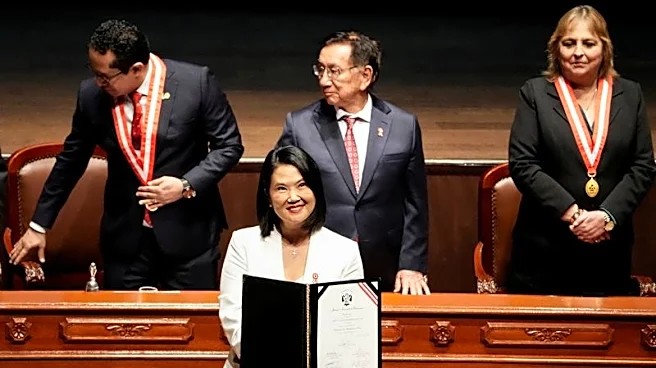
Keiko Fujimori, the newly elected president of Peru, has appointed a predominantly male cabinet, with only two women among 19 ministers. This decision has sparked criticism from feminist groups and human rights advocates who argue that it undermines gender
equality efforts. Fujimori's cabinet includes Maria Seminario as Minister of Women and Vulnerable Populations and Maritza Canales as Minister of Development and Social Inclusion. Critics highlight the lack of focus on women's issues in Fujimori's agenda, raising concerns about the administration's commitment to gender equality.
Why It's Important?
The composition of Fujimori's cabinet is significant as it reflects broader societal and political attitudes towards gender equality in Peru. The lack of female representation in leadership positions can hinder progress on women's rights and limit diverse perspectives in policymaking. This development may influence public perception of Fujimori's presidency and affect her ability to address gender-related issues effectively.
What's Next?
Fujimori's administration may face increasing pressure from civil society and international organizations to address gender disparities in government. Future policy decisions and cabinet reshuffles could be influenced by ongoing criticism and demands for greater female representation. The administration's response to these challenges will be crucial in shaping its legacy on gender equality.