
What's Happening?
Researchers have uncovered a well-preserved construction site in Pompeii, revealing the ancient Roman method of creating durable concrete. This site, frozen in time by the eruption of Mount Vesuvius in 79
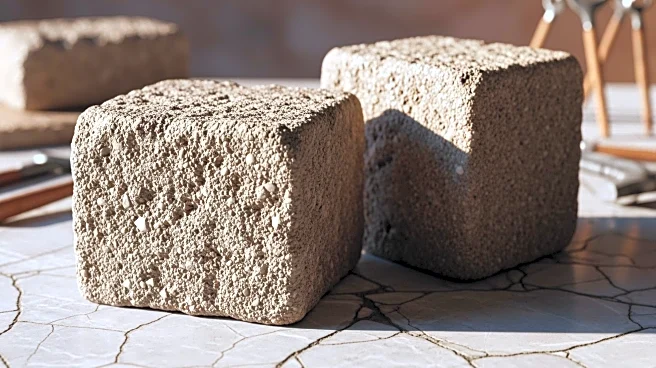
AD, provided insights into the 'hot mixing' process used by the Romans. This method involved combining dry volcanic ash and quicklime with water, triggering a chemical reaction that produced heat and resulted in a self-healing concrete. The discovery offers a unique glimpse into Roman engineering practices, as the site allowed researchers to study the building process as it happened, unlike other ancient sites where concrete has been weathered over time.
Why It's Important?
The discovery of the Roman concrete recipe is significant for modern construction, as it could lead to the development of more durable and sustainable building materials. The self-healing properties of Roman concrete, which allowed structures to withstand centuries of wear and natural disasters, could inspire new techniques to improve modern concrete. This could reduce maintenance costs and environmental impact, addressing the growing need for sustainable infrastructure. Additionally, understanding the exact methods used by the Romans could aid in the restoration of ancient structures, ensuring historically accurate repairs.
What's Next?
Researchers hope to apply the insights gained from the Roman concrete recipe to modern construction practices. By incorporating the self-healing properties of Roman concrete, they aim to develop next-generation materials that require less maintenance and have a lower environmental footprint. This could revolutionize the construction industry, leading to more resilient infrastructure. Furthermore, the study may prompt further research into ancient building techniques, potentially uncovering additional methods that could benefit modern engineering.
Beyond the Headlines
The discovery challenges traditional understandings of Roman concrete production, particularly the methods described by the architect Vitruvius. The findings suggest that by 79 AD, Romans had evolved to use more advanced techniques than previously thought. This highlights the sophistication of Roman engineering and the potential for ancient knowledge to inform modern practices. The study underscores the importance of historical research in uncovering lost technologies that could address contemporary challenges.