



What's Happening?
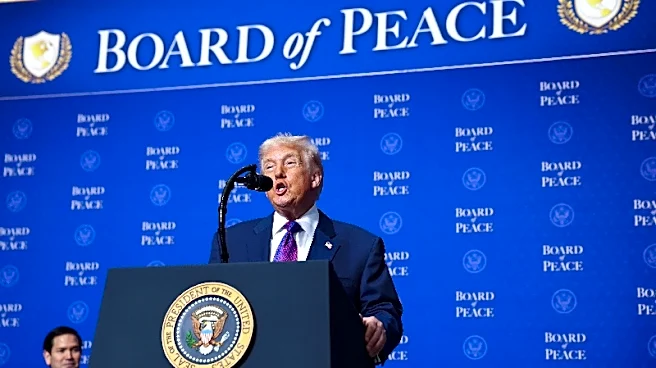
The United States has instructed its embassy in Jerusalem to pressure Palestinian leaders to withdraw their bid for a vice-presidency role at the United Nations General Assembly. This move is part of a broader strategy by the Trump administration to prevent
Palestinians from gaining influential positions that could allow them to chair significant debates on Middle Eastern issues. The U.S. has warned of 'consequences' if the Palestinian Authority does not comply by the specified deadline. The administration argues that the candidacy undermines President Trump's peace plan for Gaza, which includes a 20-point proposal for reconstruction. The U.S. has previously revoked visas for Palestinian officials and may consider similar actions if the bid is not withdrawn.
Why It's Important?
This development is significant as it highlights the ongoing diplomatic tensions between the U.S. and the Palestinian Authority. The U.S. administration's actions reflect its broader policy of opposing Palestinian statehood efforts and maintaining influence over Middle Eastern diplomatic processes. The potential withdrawal of the Palestinian bid could impact the Palestinian Authority's ability to participate in high-level UN discussions, thereby affecting their international standing and diplomatic leverage. Additionally, the U.S.'s stance may influence its relations with other countries involved in Middle Eastern diplomacy and could affect future peace negotiations.
What's Next?
If the Palestinian Authority does not withdraw its bid, the U.S. may follow through on its threats, potentially revoking visas for Palestinian officials at the UN. This could further strain U.S.-Palestinian relations and impact the Palestinian Authority's diplomatic activities. The situation may also prompt reactions from other UN member states, particularly those supportive of Palestinian statehood, potentially leading to broader diplomatic discussions or conflicts within the UN framework.