



What's Happening?
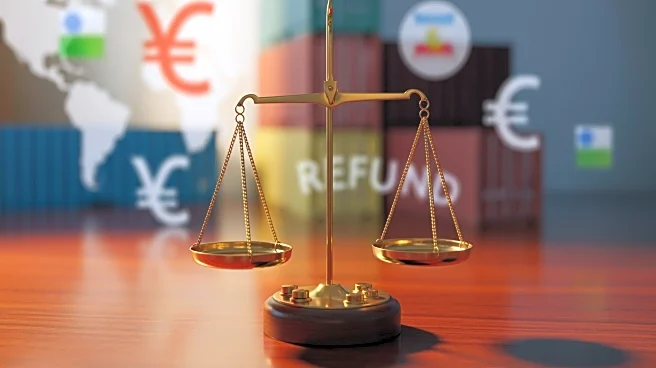
A recent survey by the European Investment Bank (EIB) indicates that European Union companies have managed to cope with increased U.S. tariffs on EU goods. However, these firms are encountering significant challenges when attempting to sell their products
within the EU due to fragmented national regulations. The survey, which gathered responses from approximately 13,000 firms, highlights that while EU companies have adapted to technological advancements and the green transition, internal trade barriers remain a substantial hurdle. The survey also notes that EU firms are on par with U.S. companies in terms of artificial intelligence usage, which has enhanced their productivity. Despite the challenges, the impact of U.S. tariffs has been largely absorbed by American importers, keeping the situation manageable for EU exporters.
Why It's Important?
The findings underscore the resilience of EU firms in the face of external trade pressures, such as U.S. tariffs, while highlighting the persistent internal challenges within the EU's single market. The fragmented regulatory environment within the EU poses a significant barrier to intra-bloc trade, potentially stifling economic growth and innovation. Addressing these internal barriers could significantly boost firm investment and enhance the EU's competitive edge globally. The survey's insights into the use of artificial intelligence also suggest that technological advancements are crucial for maintaining productivity and competitiveness in the global market.