



What's Happening?
A recent study has explored the presence of superionic hydrogen in Earth's inner core, suggesting it could be more abundant than previously thought. Researchers modeled different types of superionic hydrogen, which behaves like a liquid and conducts electricity
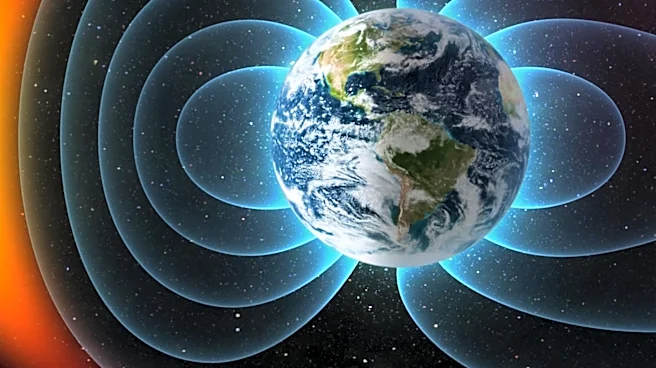
under extreme conditions. The study found that the hexagonal close-packed (HCP) phase of superionic hydrogen is more stable than the body-centered cubic (BCC) phase under the core's conditions. This discovery could provide insights into the core's composition and the geodynamo, which drives Earth's magnetic field. The study highlights the role of temperature in controlling hydrogen distribution within the core.
Why It's Important?
Understanding the composition and behavior of Earth's inner core is crucial for comprehending the planet's magnetic field and its geodynamic processes. The presence of superionic hydrogen could influence the core's dynamics and evolution, impacting the geodynamo that generates Earth's magnetic field. This research could lead to a better understanding of the core's role in Earth's overall geophysical processes. Additionally, the study's findings may have implications for the study of other planetary bodies with similar core compositions.