





What's Happening?
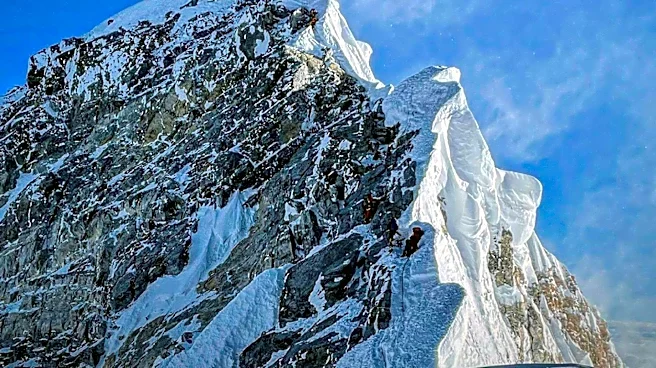
Mount Everest climbers face significant dangers due to queues forming at high altitudes, particularly in the 'death zone' above 8,000 meters. These queues can lead to increased risks of hypothermia and frostbite as climbers are forced to wait in extreme
cold and wind conditions. The delays also deplete oxygen supplies, which are critical for survival at such altitudes. The situation is exacerbated by the narrow routes and fixed ropes that limit movement, making it difficult for climbers to overtake or descend quickly. The 2019 Everest crowding season highlighted these dangers, with reports of climbers running out of oxygen and suffering from severe hypoxia, which affects both physical and mental faculties.
Why It's Important?
The dangers posed by queues on Mount Everest have significant implications for the safety and management of climbing expeditions. The increased risk of hypothermia and oxygen depletion can lead to fatalities, as climbers may be unable to descend safely. This situation underscores the need for better management of climbing routes and stricter regulations on the number of climbers allowed on the mountain at any given time. The economic impact is also notable, as the tourism industry in Nepal relies heavily on Everest expeditions. However, the safety of climbers must be prioritized to prevent tragedies and ensure sustainable tourism practices.
What's Next?
To address the dangers of Everest queues, several measures could be implemented. These include stricter screening of climbers to ensure they have the necessary experience and skills, staggered summit timings to reduce congestion, and better route management to facilitate smoother movement. Additionally, enforcing firm turnaround times can prevent climbers from pushing beyond safe limits. There is also a discussion around limiting the number of permits issued to reduce crowding, though this could impact local economies and expedition companies. Ultimately, a balance must be struck between maintaining safety and supporting the local economy.
Beyond the Headlines
The issue of Everest queues highlights broader ethical and environmental concerns. The commercialization of Everest expeditions has led to increased traffic on the mountain, raising questions about the sustainability of such practices. The environmental impact of large numbers of climbers, including waste management and the preservation of the natural landscape, is a growing concern. Furthermore, the reliance on Sherpas and local guides, who face significant risks themselves, raises ethical questions about the responsibilities of expedition companies and climbers. Addressing these issues requires a comprehensive approach that considers both safety and environmental sustainability.