

What's Happening?
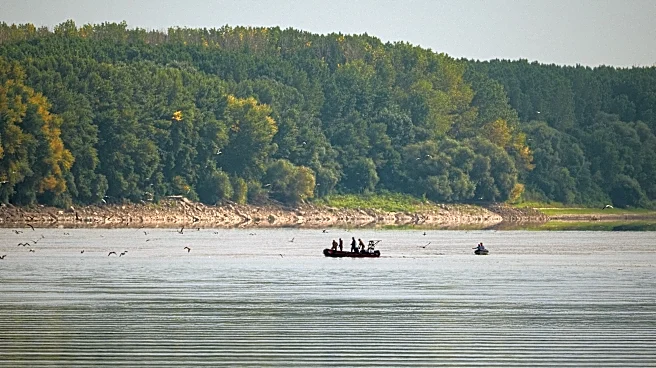
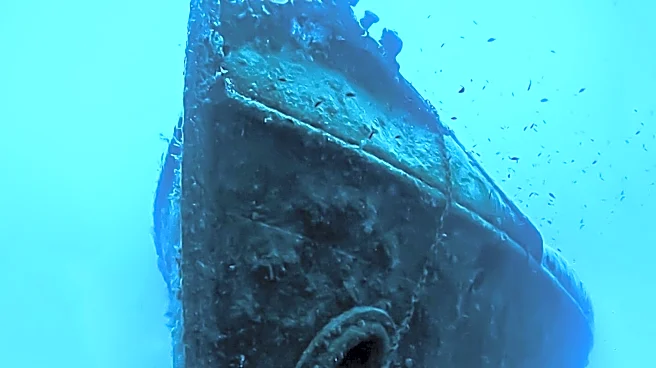
The Danube River, which flows through 10 European nations, is experiencing record low water levels due to an ongoing drought and heatwave. This has led to the emergence of World War II German battleships, which were scuttled by Nazi Germany's Black Sea
fleet in 1944 to slow the Soviet advance. The ships, some still carrying explosives, are now visible near the Serbian port of Prahovo. The low water levels are also affecting power plants, pushing them to the brink of shutdown, and prompting governments in Central and Eastern Europe to take measures to conserve electricity. The situation is exacerbated by the unusually hot weather, which experts link to global warming.
Why It's Important?
The exposure of World War II shipwrecks in the Danube River highlights the historical and environmental impacts of climate change. The low water levels are not only a reminder of past conflicts but also pose a current threat to navigation and safety due to the presence of unexploded ordnance. The situation underscores the vulnerability of infrastructure and energy systems to climate-induced changes, as power plants struggle to operate under these conditions. This event also raises questions about the preservation of historical artifacts and the need for international cooperation to address the challenges posed by climate change.
What's Next?
Authorities are likely to continue efforts to manage the low water levels in the Danube River to ensure safe navigation and prevent further disruptions to power generation. This may involve dredging operations or other interventions to maintain river traffic. Additionally, there may be increased focus on removing or securing the exposed shipwrecks to mitigate safety risks. The situation could also prompt further discussions on climate adaptation strategies and the need for coordinated action to address the impacts of extreme weather events on infrastructure and cultural heritage.
Beyond the Headlines
The emergence of World War II shipwrecks in the Danube River serves as a poignant reminder of the interconnectedness of history and climate change. The event highlights the potential for climate change to uncover hidden aspects of history, prompting discussions about the preservation and documentation of such artifacts. It also underscores the need for comprehensive approaches to climate adaptation that consider environmental, historical, and cultural dimensions. The situation may lead to increased public awareness and engagement on climate issues, as well as a reevaluation of policies related to heritage conservation and environmental management.