








What's Happening?
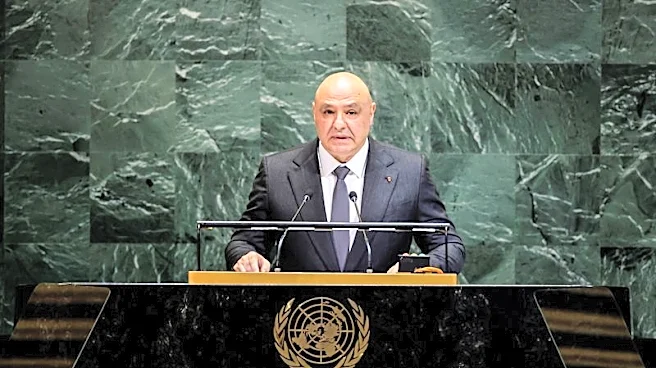
Lebanese President Joseph Aoun has accused Iran of using Lebanon as a bargaining chip in peace negotiations with the United States. In an exclusive interview, Aoun expressed frustration over Iran's influence in Lebanon, particularly through Hezbollah,
an Iranian-backed group. Aoun is pursuing direct negotiations with Israel to end ongoing conflicts, despite opposition from Hezbollah. The Lebanese president emphasized the desire of the Lebanese people to live in peace, free from the recurring destruction caused by conflicts with Israel. The situation is further complicated by Iran's condition that any peace agreement with the US must include Israel's withdrawal from Lebanon. Aoun's stance represents a significant shift in Lebanese policy, as he seeks to reduce Hezbollah's influence and negotiate directly with Israel.
Why It's Important?
This development is crucial as it highlights the complex geopolitical dynamics in the Middle East, particularly the influence of Iran in Lebanon through Hezbollah. Aoun's move to negotiate directly with Israel could alter the balance of power in the region and potentially lead to a reduction in hostilities. However, it also risks internal conflict within Lebanon, as Hezbollah remains a powerful force with significant domestic support. The outcome of these negotiations could impact US foreign policy in the region, as well as the stability of Lebanon, which has been weakened by decades of foreign interference and sectarian strife. The situation underscores the broader struggle for influence between Iran and the US in the Middle East.
What's Next?
The next steps involve potential negotiations between Lebanon and Israel, which could lead to a ceasefire and a reduction in hostilities. However, Hezbollah's opposition to disarmament and Israel's demand for Hezbollah to lay down its weapons complicate the situation. Aoun's government faces the challenge of balancing internal pressures with the need to reduce foreign influence. The international community, particularly the US, will likely monitor these developments closely, as they could have significant implications for regional stability and US-Iran relations. The success of Aoun's strategy will depend on his ability to persuade Hezbollah to disarm and negotiate a lasting peace with Israel.
Beyond the Headlines
The situation in Lebanon reflects broader issues of national sovereignty and the influence of external powers in domestic affairs. Aoun's criticism of Iran highlights the tension between national interests and foreign alliances. The potential disarmament of Hezbollah raises questions about the future of Lebanon's political landscape and the role of armed groups in shaping national policy. The outcome of these negotiations could set a precedent for how small states navigate relationships with larger powers and manage internal divisions. The long-term implications for Lebanon's sovereignty and stability remain uncertain, as the country grapples with the legacy of past conflicts and the influence of powerful regional actors.