







What's Happening?
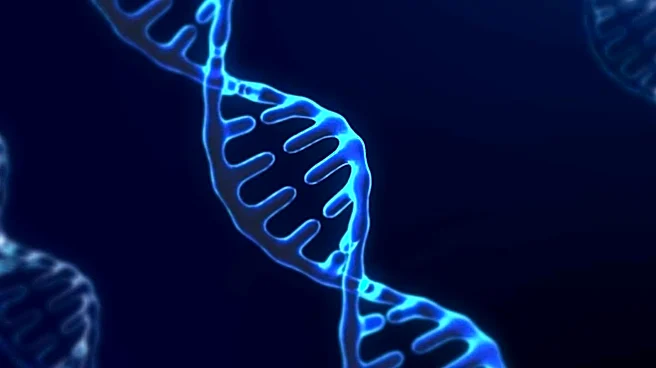
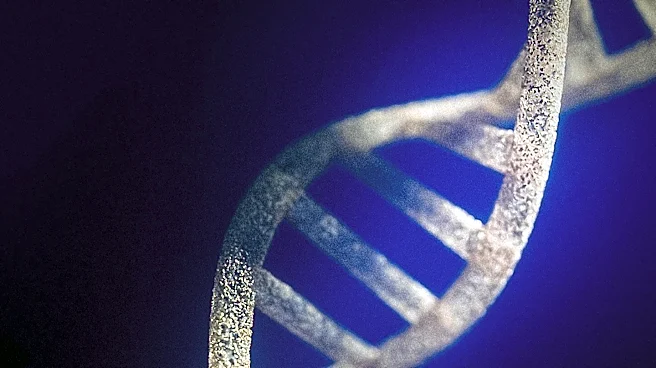
Recent advancements in DNA-origami nanorobots have demonstrated significant potential in medical applications, particularly in ocular penetration and choroidal neovascularization therapy. These nanorobots, constructed by folding DNA strands into specific
shapes, have shown enhanced stability and efficient nucleolin degradation. The study highlights their application in improving wound healing and cancer therapy, leveraging their unique structural properties and functional capabilities. The research, conducted with ethical approval, involved various experimental setups, including animal models and cell cultures, to test the efficacy and stability of these nanorobots in therapeutic contexts.
Why It's Important?
The development of DNA-origami nanorobots represents a significant leap in targeted drug delivery systems, offering a new avenue for treating complex diseases like cancer and ocular conditions. Their ability to penetrate ocular tissues and degrade specific proteins efficiently could revolutionize treatments for eye diseases, potentially reducing the need for invasive procedures. In cancer therapy, these nanorobots could provide a more precise method of delivering drugs, minimizing side effects and improving patient outcomes. The implications for the pharmaceutical industry and healthcare providers are substantial, as these technologies could lead to more effective and personalized treatment options.
What's Next?
Future research will likely focus on optimizing the design and functionality of DNA-origami nanorobots to enhance their therapeutic efficacy and safety. Clinical trials may be on the horizon to evaluate their performance in human subjects, particularly for conditions like age-related macular degeneration and various cancers. Additionally, collaborations between biotech companies and research institutions could accelerate the development and commercialization of these nanorobots, potentially leading to new treatment protocols and healthcare solutions.