



What's Happening?
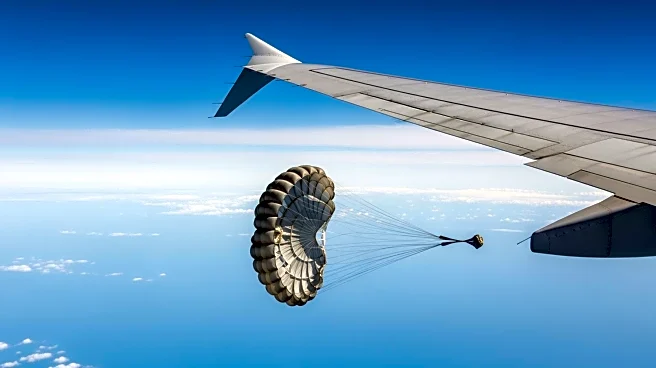
A skydiving incident in Queensland, Australia, involved a parachutist whose reserve parachute inadvertently deployed and became entangled with the tail of a Cessna 208 Caravan at 15,000 feet. The skydiver, part of a group of 17, was left hanging from
the plane's tail after the chute snagged on the aircraft's horizontal stabilizer. The pilot, initially unaware of the situation, managed to stabilize the aircraft after being informed of the skydiver's predicament. The skydiver used a hook knife to cut through 11 ropes, freeing the chute and allowing for a safe descent. The incident, which occurred on September 20, resulted in minor injuries to the skydiver, who hit the stabilizer during the ordeal. The Australian Transport Safety Bureau has since recommended that all parachutists carry a hook knife for emergencies.
Why It's Important?
This incident highlights the critical importance of safety measures and emergency preparedness in skydiving operations. The use of a hook knife, although not mandatory, proved essential in averting a potential disaster. The event underscores the need for skydiving clubs and operators to reassess safety protocols and equipment requirements to prevent similar occurrences. The Far North Freefall Club, which organized the jump, has already implemented changes by mandating the carrying of hook knives. This development could influence regulatory bodies to consider revising safety standards for skydiving activities, potentially impacting the broader skydiving community and industry.
What's Next?
Following the incident, the Australian Transport Safety Bureau's recommendations may lead to changes in safety regulations for skydiving operations. Skydiving clubs and operators might adopt stricter safety protocols, including mandatory equipment like hook knives. The incident could prompt further investigations into the safety practices of skydiving operations globally, potentially leading to new industry standards. Stakeholders, including skydiving associations and regulatory bodies, may engage in discussions to enhance safety measures and prevent future incidents.