




What's Happening?
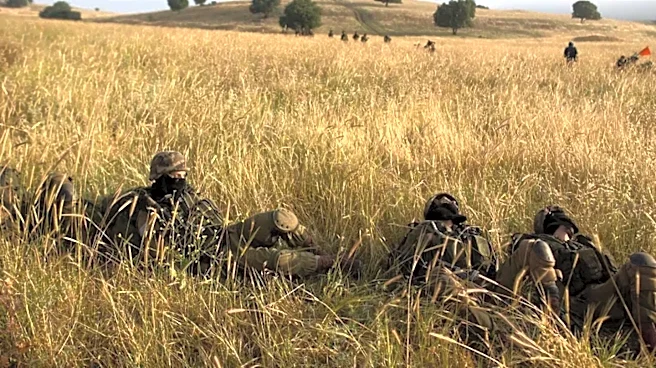
The return of the Louisiana Maneuvers has been endorsed, with a particular emphasis on stressing logistics during military training exercises. This endorsement, shared by John Konrad V on September 22, 2026, highlights the historical significance of these
maneuvers. The original 1941 Louisiana Maneuvers famously exposed a major weakness in military logistics when General Patton's tanks had to stop at highway gas stations. This critical observation subsequently made fuel delivery a top wartime priority, demonstrating the importance of realistic and challenging training scenarios in identifying and addressing operational deficiencies.
Why It's Important?
The reintroduction of the Louisiana Maneuvers, with a focus on logistics, is crucial for modern military preparedness. In contemporary warfare, efficient and resilient supply chains are paramount. Lessons from past conflicts, such as the 1941 maneuvers, underscore that even the most advanced military hardware is ineffective without robust logistical support. By intentionally stressing logistics during these exercises, the U.S. military can identify potential vulnerabilities in its current systems, adapt to new challenges, and develop more effective strategies for fuel, ammunition, and other critical supply deliveries. This proactive approach ensures that the military remains agile and capable of sustaining operations in diverse and demanding environments, ultimately enhancing national security and operational readiness.
What's Next?
Following the endorsement, it is anticipated that the U.S. military will proceed with planning and executing the revived Louisiana Maneuvers. The focus will be on designing scenarios that rigorously test logistical capabilities, potentially incorporating modern challenges such as cyber threats to supply chains, contested environments, and rapid deployment requirements. Military strategists and planners will likely analyze the outcomes of these exercises to refine logistical doctrines, invest in new technologies, and improve training methodologies. The insights gained will inform future procurement decisions and operational strategies, ensuring that the U.S. military maintains a cutting-edge logistical advantage. The emphasis on learning from historical precedents suggests a continuous cycle of evaluation and improvement in military readiness.
Beyond the Headlines
The revival of the Louisiana Maneuvers with a logistics focus speaks to a deeper understanding within military leadership that technological superiority alone is insufficient for victory. It highlights the enduring importance of fundamental operational aspects, often overlooked in favor of advanced weaponry. This approach reflects a strategic recognition that complex military operations are only as strong as their weakest link, and logistics frequently represent that critical vulnerability. Furthermore, it underscores a commitment to continuous learning from history, applying lessons from past successes and failures to current and future challenges. This emphasis on practical, large-scale training exercises also serves as a deterrent, signaling to potential adversaries that the U.S. military is not only technologically advanced but also capable of sustaining prolonged and complex operations.