







What's Happening?
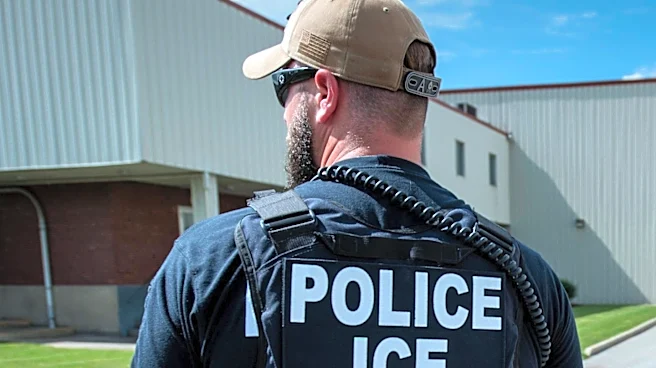
Sanford police responded to a U.S. Immigration and Customs Enforcement (ICE) detention incident on Thursday morning after federal agents reported a car crash and the presence of unattended children. The incident occurred near Brook and High streets when
ICE agents attempted to stop a man, who then reversed his vehicle into one of the federal vehicles. A video shared with the Portland Press Herald shows two SUVs blocking the driver, who subsequently backed into the vehicle behind him. Sanford police Chief Eric Small stated that federal agents called dispatch after the crash, prompting local police response. Officers also assisted with a 1-year-old child found in the man’s car. Officials confirmed no one was injured, though the 1-year-old was taken to a hospital as a precaution. The man was detained, and it was later discovered he had two more children, aged 9 and 2, unattended at his nearby home. Child Protective Services and the Maine Department of Health and Human Services were contacted, and the children are now with a family friend.
Why It's Important?
This incident highlights ongoing concerns regarding the operational tactics of ICE and their potential impact on public safety and community well-being, particularly when children are involved. The involvement of local police in an ICE operation, even if in a supportive role after an incident, can raise questions about jurisdiction and the role of local law enforcement in federal immigration matters. U.S. Rep. Chellie Pingree criticized the incident, citing it as another example of ICE's aggressive operations putting public safety at risk, drawing parallels to a fatal July shooting during an attempted traffic stop in Biddeford. The situation also underscores the emotional and logistical challenges faced by families during immigration enforcement actions, as evidenced by the discovery of unattended children and the driver's reported stress. The call for transparency, specifically the release of body-worn and dashboard camera footage, reflects a broader public demand for accountability in federal law enforcement operations.
What's Next?
U.S. Rep. Chellie Pingree has called on federal agencies, including ICE, U.S. Border Patrol, and the U.S. Department of Homeland Security, to promptly release any footage of the incident, including from body-worn and dashboard cameras. This demand for transparency suggests potential further scrutiny of ICE's operational procedures. Immigration officials have not yet responded to questions regarding the man's detention, indicating that more information may be released as investigations or inquiries proceed. The involvement of Child Protective Services and the Maine Department of Health and Human Services means that the welfare of the children will continue to be monitored. The incident may also fuel ongoing debates among lawmakers and the public regarding immigration enforcement policies and the balance between security and humanitarian concerns, particularly in cases involving families and children.
Beyond the Headlines
The incident in Sanford touches upon several deeper implications beyond the immediate event. Ethically, it raises questions about the proportionality of force and the potential collateral impact of immigration enforcement actions on innocent parties, especially children. The discovery of unattended children underscores the often-unforeseen consequences of such operations on family units and community stability. Legally, the incident could contribute to ongoing discussions about the scope of ICE's authority and the extent to which local law enforcement should be involved in or respond to federal immigration activities. Culturally, it reflects the broader tension surrounding immigration in the U.S., with some viewing ICE operations as necessary for national security and others criticizing them as overly aggressive and disruptive to communities. The call for video release also highlights the increasing role of digital evidence and public transparency in shaping narratives and accountability in law enforcement.