

What's Happening?
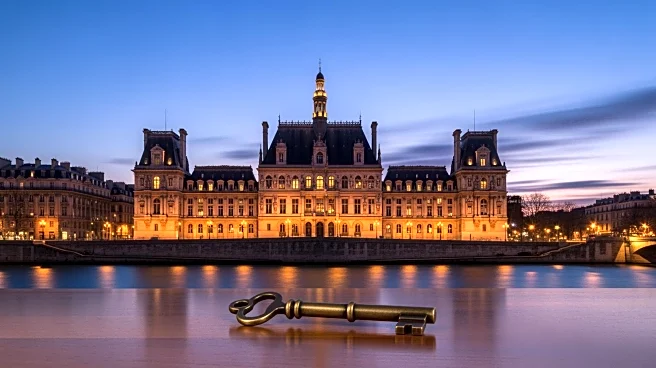
Emmanuel Grégoire, a Socialist politician, has been elected as the new mayor of Paris, succeeding Anne Hidalgo. Grégoire, who has been involved in local politics for years, won the mayoral race with over 50% of the votes, defeating conservative candidate
Rachida Dati and hard-left contender Sophia Chikirou. Grégoire's victory marks a continuation of the left's control over Paris, a position held for the past 25 years. His campaign focused on making Paris greener and addressing the city's housing crisis. Grégoire has a history of working closely with Hidalgo, having served as her first deputy mayor and overseeing key portfolios such as budget and urban policies.
Why It's Important?
Grégoire's election is significant as it reflects the political climate in Paris and potentially sets the stage for the upcoming presidential elections in France. His victory underscores the city's preference for left-wing policies, particularly in areas like environmental sustainability and housing. Grégoire's focus on combating the housing crisis by regulating short-term rentals and creating affordable housing units is crucial for maintaining the city's livability for residents. Additionally, his commitment to continuing the green initiatives started by his predecessors could influence urban policy in other major cities facing similar challenges.
What's Next?
As the new mayor, Grégoire is expected to implement his campaign promises, including increasing cycling lanes and addressing the housing shortage. He will also need to navigate public dissatisfaction over roadwork disruptions and mounting city debt. Grégoire's leadership style, which he describes as accessible and connected to the people, will be tested as he seeks to balance continuity with innovation. His approach to handling the recent child abuse allegations in Paris schools will also be closely watched, as he has pledged to improve the recruitment and training of school monitors.
Beyond the Headlines
Grégoire's election highlights the ongoing political dynamics within the French left, particularly his decision to distance himself from the more radical elements of the left-wing coalition. His refusal to ally with France Unbowed, a hard-left party, suggests a strategic move to appeal to moderate voters. This decision may have broader implications for the left's unity and effectiveness in future elections. Additionally, Grégoire's personal revelation of being a victim of child abuse adds a poignant dimension to his leadership, potentially influencing his policy priorities and public perception.