








What's Happening?
Professor Andrew Knight, a Veterinary Professor of Animal Welfare and Associate Professor at Murdoch University School of Veterinary Medicine, has responded to public concerns regarding vegan diets for cats. This comes after a recent article on Phys.org
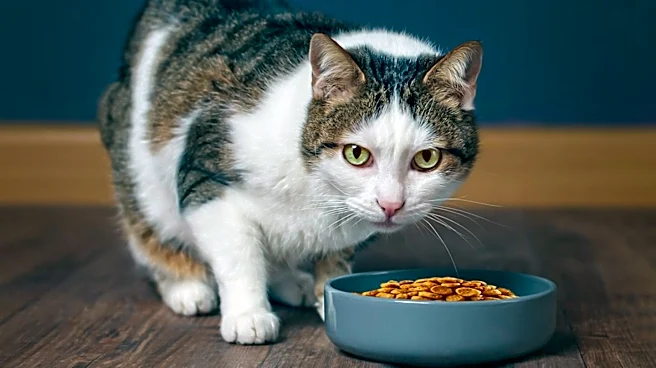
sparked debate, with many readers arguing that cats, as obligate carnivores, could suffer health issues on a vegan diet. Professor Knight's response addresses these criticisms, highlighting that modern vegan pet diets are formulated to be nutritionally complete and balanced, often supplemented with essential nutrients like taurine, which is also commonly added to meat-based cat foods due to degradation during processing. He notes that recent studies, including his own, suggest equivalent or even superior health outcomes for cats on nutritionally sound vegan diets, with some research indicating a lower likelihood of obesity in vegan-fed cats. The increasing popularity of vegan pet diets is driven by growing awareness of animal agriculture's significant environmental impact, including deforestation and greenhouse gas production, and the welfare concerns associated with high-density animal farming.
Why It's Important?
The discussion around vegan pet diets is important for several reasons, particularly in the U.S., which has high pet ownership rates. Pets consume a substantial portion of farmed animals globally, with studies indicating that pets in nations like the U.S. consume around 20% of all farmed land animals. This consumption contributes significantly to the environmental footprint of animal agriculture, including deforestation and greenhouse gas emissions. The potential for nutritionally sound vegan diets to reduce this impact offers a pathway toward more sustainable lifestyles, extending beyond human diets. Furthermore, the research suggesting that vegan diets may lead to better health outcomes for cats, such as reduced obesity, could have significant implications for veterinary care and pet owner choices, potentially lowering healthcare costs and improving animal welfare. The debate also underscores the evolving understanding of pet nutrition and the ethical considerations surrounding animal agriculture.
What's Next?
Future research will likely focus on larger sample sizes and more clinical data to further validate the health outcomes of vegan diets for cats, addressing current uncertainties. This could lead to more definitive guidelines for pet owners and veterinarians. As awareness of the environmental impact of pet food grows, there may be increased demand for and innovation in plant-based pet food options. Policymakers and animal welfare organizations may also become more involved in promoting sustainable pet diets, potentially influencing product labeling and consumer education. The ongoing dialogue between researchers, pet owners, and the pet food industry will be crucial in shaping the future of pet nutrition and its role in broader sustainability efforts.
Beyond the Headlines
Beyond the immediate health and environmental implications, the debate over vegan pet diets touches on deeper ethical and cultural dimensions. It challenges traditional views of pet ownership and the perceived natural diets of companion animals. The concept of 'obligate carnivore' is being re-evaluated in the context of modern nutritional science and the ability to synthesize essential nutrients. This shift reflects a broader societal trend towards plant-based living and a re-examination of human-animal relationships. The discussion also highlights the ethical dilemma of balancing animal welfare with environmental sustainability, particularly when considering the impact of pet food production on farmed animals. The increasing acceptance and scientific validation of vegan pet diets could signify a long-term shift in how society views and cares for its animal companions, moving towards more conscious and sustainable choices.