


What's Happening?
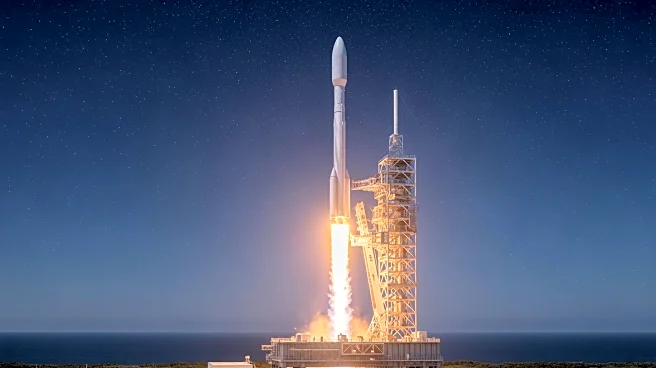
For the first time, scientists have successfully measured air pollution in real-time from a SpaceX Falcon 9 rocket re-entry. The event, which occurred on February 20, 2025, involved the upper stage of the rocket burning up over Europe, creating a visible
plume of pollution. Researchers from the Leibniz Institute of Atmospheric Physics in Germany used LIDAR technology to detect a significant increase in lithium density in the atmosphere, a marker of human-made re-entry. This study marks a breakthrough in understanding the chemical reactions and potential atmospheric damage caused by space debris re-entries.
Why It's Important?
The findings underscore the growing concern over space debris and its environmental impact. As the number of satellites and space missions increases, so does the amount of debris re-entering Earth's atmosphere. This pollution could potentially harm the ozone layer and alter atmospheric conditions, leading to climate changes. The study provides crucial data for improving models that assess the global environmental impacts of spacecraft re-entry, highlighting the need for sustainable space practices.
What's Next?
Researchers plan to continue monitoring space debris re-entries to better understand their impact on the atmosphere. Future studies will focus on measuring other metal compounds released during re-entries, such as aluminum oxide, which is known to deplete ozone. These efforts aim to inform policy and guide the development of strategies to mitigate the environmental effects of space activities.