






What's Happening?
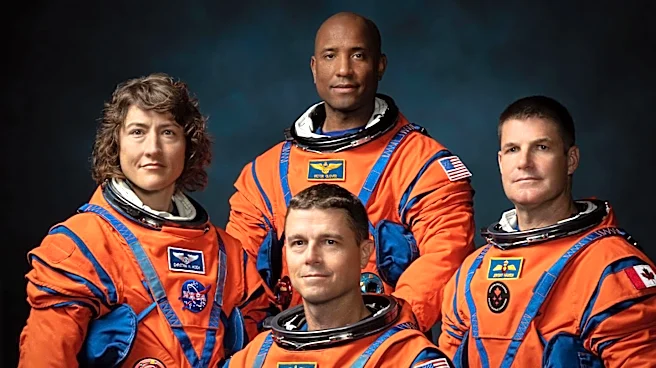
The Artemis II mission, part of NASA's lunar exploration program, has demonstrated the scientific potential of consumer-grade cameras in space. During the mission, astronauts used a Nikon Z9 mirrorless camera to capture images of a total solar eclipse
while orbiting the moon. These images were later analyzed by researchers from Tokyo City University to study the F-corona, a phenomenon involving interplanetary dust particles that scatter sunlight. The study revealed that the images, despite being in JPEG format, provided reliable data comparable to professional astronomical observations. The Nikon Z9, not originally part of the mission's equipment, was included after Commander Reid Wiseman advocated for its use as a test platform for future missions.
Why It's Important?
This development highlights the potential for using commercially available technology in scientific research, particularly in space exploration. By demonstrating that consumer cameras can yield valuable scientific data, NASA and other space agencies might reduce costs and increase accessibility to high-quality imaging tools. This could lead to more frequent and diverse data collection opportunities, benefiting scientific communities and enhancing our understanding of space phenomena. The success of the Nikon Z9 in this mission may encourage further integration of consumer technology in future space missions, potentially accelerating advancements in space research and exploration.
What's Next?
Following the success of the Nikon Z9 in the Artemis II mission, NASA is likely to continue exploring the use of consumer technology in its future missions. The agency is already collaborating with Nikon on the development of the Handheld Universal Lunar Camera, which is expected to be used in the upcoming Artemis IV mission. This ongoing partnership suggests a trend towards incorporating more versatile and cost-effective imaging solutions in space exploration. As these technologies prove their reliability and effectiveness, they may become standard tools in NASA's arsenal, paving the way for more innovative approaches to data collection and analysis in space.