

What's Happening?
President Trump is contemplating military strikes against Iran, with a decision expected within the next 10 days. This development comes amid heightened tensions in the Middle East, where a significant U.S. military buildup is underway. The potential
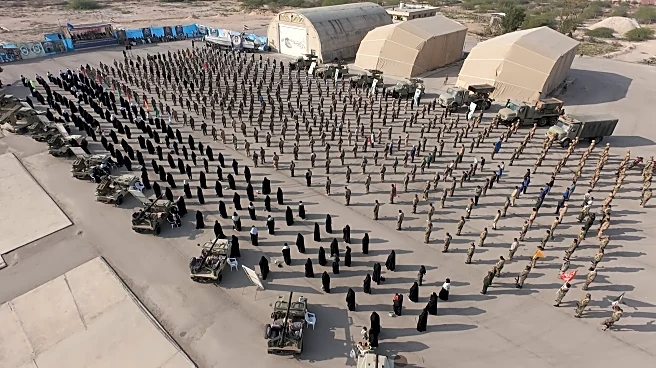
for conflict has already impacted global oil markets, with prices rising over 5% this week. The primary concern is the Strait of Hormuz, a critical chokepoint for global oil trade, through which more than 14 million barrels of oil pass daily. Iran's Revolutionary Guard has demonstrated its capability to disrupt this passage, having partially closed it for military exercises. The possibility of a prolonged closure could severely impact global oil supply, as the strait is essential for oil exports to major economies like China, India, Japan, and South Korea.
Why It's Important?
The potential military action by the U.S. against Iran could have significant repercussions for the global oil market and the broader economy. The Strait of Hormuz is a vital artery for oil transportation, and any disruption could lead to a sharp increase in oil prices, potentially exceeding $100 per barrel. Such a spike could curb demand and trigger an economic downturn. The situation is further complicated by Iran's military capabilities, which include advanced weaponry and stockpiles of mines and missiles that could threaten commercial shipping. Insurance companies, like Lloyd's, may refuse to cover tankers navigating the strait under these conditions, exacerbating the risk of supply disruptions.
What's Next?
If President Trump decides to proceed with military action, it is expected to be targeted and designed to avoid damaging Iran's oil infrastructure. However, even limited strikes could provoke a broader conflict, leading to further instability in the region. The global energy market is closely monitoring the situation, as any escalation could have far-reaching consequences for oil supply and prices. Stakeholders, including governments and businesses, are likely to prepare for potential disruptions by seeking alternative supply routes and increasing strategic reserves.