


What's Happening?
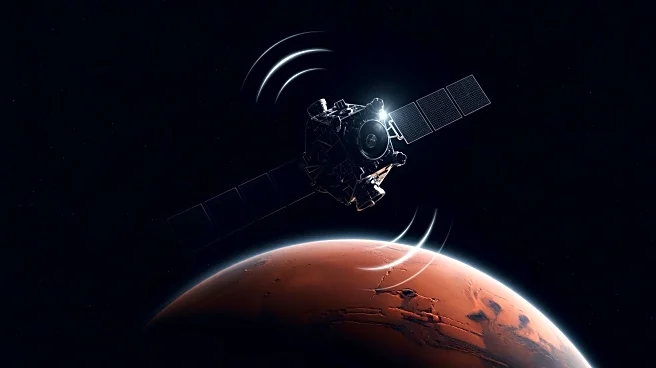
NASA's MAVEN spacecraft, which has been orbiting Mars since 2014, experienced a loss of signal with Earth on December 6. Prior to the signal loss, telemetry indicated that all subsystems were functioning normally. The spacecraft lost contact after moving
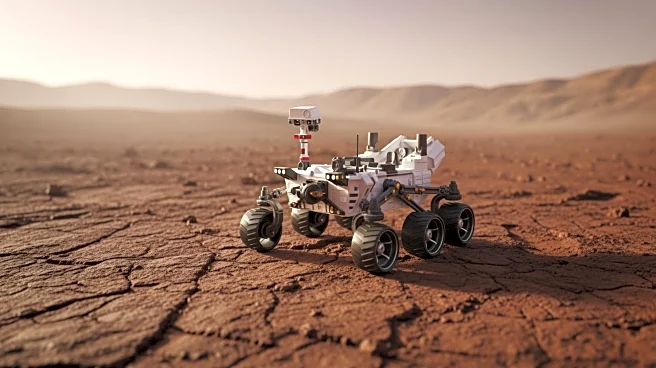
behind Mars, and upon re-emerging, the Deep Space Network failed to detect a signal. NASA teams are currently investigating the anomaly to determine the cause and address the issue. MAVEN's mission is to study Mars' upper atmosphere and its interactions with the Sun and solar wind, providing insights into the planet's atmospheric history and climate. The spacecraft also serves as a communications relay for Martian rovers.
Why It's Important?
The loss of signal from MAVEN is significant as it impacts ongoing scientific research and communication capabilities with Mars rovers. MAVEN's data is crucial for understanding the Martian atmosphere and its evolution, which has implications for planetary science and the potential for past habitability. The spacecraft's role as a relay station is also vital for the operation of surface missions. Resolving the signal issue is essential to continue these scientific and operational functions, and any prolonged disruption could delay or hinder Mars exploration efforts.
What's Next?
NASA's investigation into the signal loss will likely involve a detailed analysis of telemetry data and communication systems. The outcome will determine the next steps, which may include attempts to re-establish contact or adjustments to the spacecraft's operations. The resolution of this issue is critical for the continuation of MAVEN's mission objectives and its support role for other Mars missions. Stakeholders in the scientific community and space exploration agencies will be closely monitoring the situation for updates.