








What's Happening?
The Wilmington Police Department has announced the termination of its contract with Flock Safety, a company providing automatic license plate reading (ALPR) cameras. This decision comes in response to growing privacy concerns expressed by the community
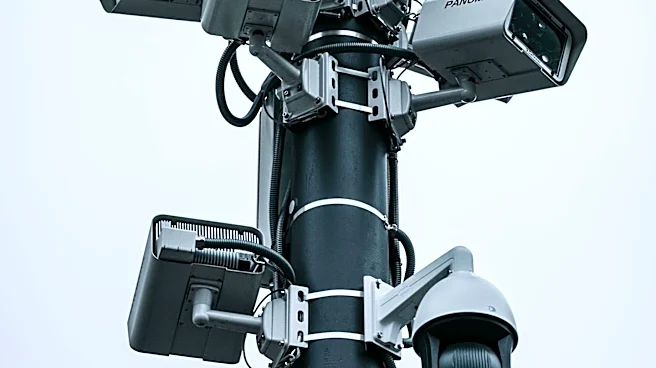
regarding the use of such surveillance technology. The department currently operates two cameras, one installed in March 2023 at Middlesex Avenue and Federal Street, and another in June 2024 on Main Street at Bridge Lane. Both cameras are slated for removal as soon as possible. The police department stated that while ALPR cameras have been instrumental in investigations, community privacy concerns and questions about Flock Safety's data usage now outweigh the continued deployment of the equipment. The department anticipates receiving a $2,500 refund due to the early termination of the contract, which was originally set to expire on February 27, 2027. Wilmington joins at least 31 other Massachusetts municipalities that have either canceled or paused their use of Flock Safety technology.
Why It's Important?
This decision by the Wilmington Police Department highlights a growing national debate surrounding privacy rights versus public safety in the context of advanced surveillance technologies. The termination of the contract reflects a significant win for privacy advocates and community groups who have raised concerns about the potential for mass surveillance and the storage of sensitive data. The move could influence other municipalities in Massachusetts and across the U.S. to re-evaluate their contracts with ALPR providers, especially as public awareness and scrutiny of these systems increase. For companies like Flock Safety, this trend indicates a challenging market environment where community acceptance and transparent data practices are becoming as crucial as technological efficacy. The financial implications, though minor for Wilmington, could accumulate for these companies if more contracts are terminated prematurely. This also sets a precedent for how police departments engage with communities on technology adoption, emphasizing the importance of public input in decisions that impact civil liberties.
What's Next?
The Wilmington Police Department plans to remove its two existing Flock Safety cameras as soon as possible. The department has also committed to notifying the community in advance and seeking public input should it consider implementing any ALPR system in the future. This suggests a more transparent and community-centric approach to surveillance technology adoption moving forward. Other communities in Greater Lowell, such as Billerica, Tewksbury, and Lowell, currently continue to use their Flock cameras, but Wilmington's decision could prompt renewed discussions and potential re-evaluations in these areas. The broader trend of cities and towns terminating or pausing ALPR contracts is likely to continue, potentially leading to increased legislative efforts to regulate the use of such technologies at state and local levels, focusing on data retention policies, access controls, and oversight mechanisms.
Beyond the Headlines
The termination of the Flock Safety contract in Wilmington delves into deeper implications concerning the Fourth Amendment and the evolving definition of privacy in the digital age. Critics argue that ALPR systems, by continuously scanning and storing license plate data, constitute a form of mass surveillance that could violate constitutional protections against unreasonable searches. The concern extends beyond criminal investigations to potential abuses, such as tracking individuals for non-criminal purposes or the misuse of data by law enforcement personnel, as seen in instances where officers tracked former romantic partners. This situation underscores the ethical dilemma of balancing security needs with individual liberties. It also highlights the power of community activism in shaping local policy and influencing the adoption of technologies that have significant societal impacts. The ongoing debate will likely drive innovation in privacy-preserving technologies and push for more robust legal frameworks governing data collection and usage by both public and private entities.