







What's Happening?
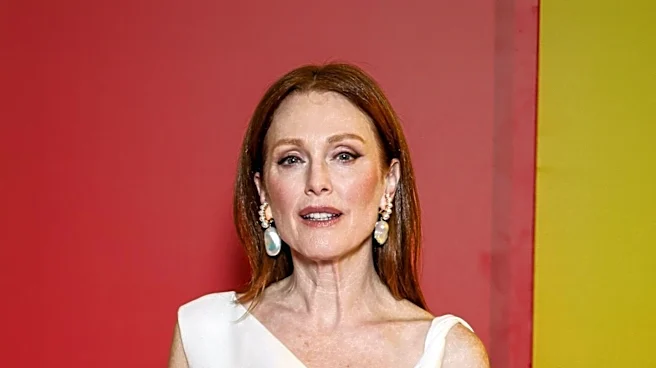
Academy Award-winning actor Julianne Moore is actively advocating for brain health and Alzheimer's prevention, a commitment stemming from her role in the film 'Still Alice.' In the movie, Moore portrayed a linguistics professor diagnosed with early-onset
Alzheimer's, which provided her with firsthand insight into the disease. This experience dispelled her previous notion that Alzheimer's is an inevitable part of aging, emphasizing instead that it is a disease influenced by various factors. Moore has partnered with Eli Lilly on their 'Brain Health Matters' campaign, encouraging individuals of all ages to prioritize their cognitive well-being. She stresses the importance of discussing risk factors and seeking evaluations during regular physicals, integrating brain health into a holistic health plan. Her advocacy highlights that lifestyle choices such as diet, exercise, sleep, socialization, and mental stimulation are crucial for protecting cognitive health.
Why It's Important?
Julianne Moore's advocacy is significant because it helps to destigmatize Alzheimer's disease and promotes a proactive approach to brain health among the general public. By leveraging her platform, Moore is raising awareness that Alzheimer's is not merely a condition of aging but a treatable disease, which can encourage more people to seek early diagnosis and intervention. This public discourse can lead to increased engagement with healthcare providers regarding cognitive concerns, potentially improving early detection rates. Furthermore, her emphasis on lifestyle factors like diet, exercise, and socialization empowers individuals to take tangible steps toward maintaining their brain health, potentially reducing the incidence and progression of cognitive decline. This initiative could also influence public health campaigns and research funding, shifting focus towards preventive strategies and comprehensive brain health education.
What's Next?
The 'Brain Health Matters' campaign, supported by Julianne Moore and Eli Lilly, is expected to continue its efforts in educating the public about the importance of cognitive health. This ongoing advocacy will likely encourage more individuals to incorporate brain-healthy habits into their daily lives and to engage in regular discussions about their cognitive well-being with healthcare professionals. The campaign's focus on dispelling misconceptions about Alzheimer's could lead to a greater demand for early diagnostic tools and preventive care. Additionally, the increased public awareness may foster a more supportive environment for individuals living with Alzheimer's and their caregivers, potentially influencing policy discussions around healthcare access and support services for neurological conditions. The continued emphasis on lifestyle interventions could also spur further research into the efficacy of diet, exercise, and social engagement in preventing cognitive decline.
Beyond the Headlines
Julianne Moore's advocacy extends beyond simple health recommendations, touching upon deeper societal and cultural implications regarding aging and disease. Her work challenges the fatalistic view of cognitive decline, promoting a narrative of empowerment and agency over one's brain health. This shift in perspective could lead to a broader cultural re-evaluation of how society views and supports its aging population, moving towards more proactive and preventive models of care. Ethically, her message underscores the importance of individual responsibility in health management while also highlighting the need for accessible information and resources. The emphasis on socialization and mental stimulation as protective factors against cognitive decline also reinforces the value of community engagement and lifelong learning, suggesting that a holistic approach to well-being is essential for both individual and collective health.