




What's Happening?
U.S. Senators Tim Kaine and Mark Warner, both Democrats from Virginia, have introduced the DCA Air Safety Act. This legislative proposal aims to mitigate overcrowding at Reagan National Airport (DCA) following a deadly 2025 crash near the airport that
resulted in 67 fatalities. The crash involved an American Airlines Bombardier jet and an Army Black Hawk helicopter over the Potomac River. The National Transportation Safety Board's (NTSB) investigation into the incident revealed that one air traffic controller was managing 29 aircraft within an 18-minute period on the night of the collision. The proposed act seeks to cap hourly arrivals at DCA, reduce flight clustering, and establish specific time windows for flights. Specifically, it mandates the Federal Aviation Administration (FAA) to lower DCA's Airport Arrival Rate to a maximum of 28 aircraft per consecutive 60-minute period. The FAA had previously stated the rate was 32 at the time of the crash, later dropping to 30. The senators emphasized the need for enhanced safety regulations to prevent future tragedies, noting that the airport operates beyond capacity and within restricted airspace.
Why It's Important?
This legislation is critical for enhancing aviation safety and addressing the long-standing issue of overcrowding at Reagan National Airport, one of the nation's busiest aviation hubs. The tragic 2025 crash underscored the severe risks associated with high traffic volumes and limited airspace, directly impacting the safety of air travelers and residents in the Washington D.C. metropolitan area. By capping hourly arrivals and reducing flight clustering, the bill aims to decrease the likelihood of future collisions and near-misses, which have occurred even after the 2025 incident, including one involving President Trump's plane. The proposed changes could lead to a more structured and safer air traffic management system, potentially reducing stress on air traffic controllers and improving overall operational efficiency. However, these measures might also lead to fewer available flight slots, potentially affecting airline operations, passenger convenience, and regional economic activity dependent on air travel. The bill's focus on a mandatory public process for slot elimination ensures transparency and stakeholder input, which is vital for balancing safety concerns with operational needs.
What's Next?
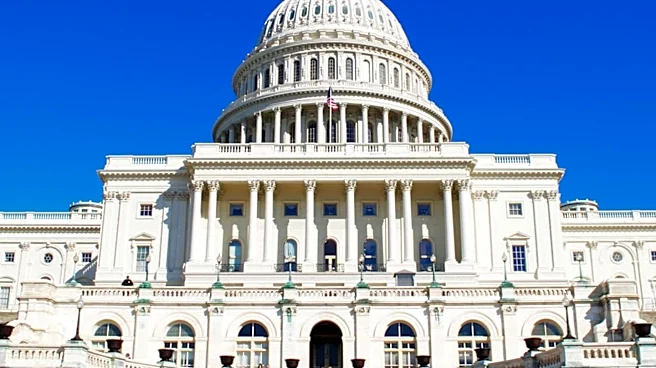
The DCA Air Safety Act will now proceed through the legislative process in Congress, where it will be considered by federal lawmakers. If passed, the legislation would require the FAA to implement several key changes. Within 180 days of enactment, airports would need to establish limits for each 30-minute period to ensure flights are more evenly distributed throughout the hour. The proposal also includes a plan to remove 30 flight slots over five years to further reduce overcrowding, starting in 2028 with the removal of six slots annually. This phased reduction, to be completed by the end of 2032, will specifically target at least 26 flights currently exceeding the airport's 1,250-mile distance limit. The FAA would also be required to conduct a mandatory public process, including publishing a proposed list of slots for elimination, allowing a 60-day public comment period, and issuing a final list within 120 days after comments close. Major stakeholders, including airlines, air traffic controllers, and passenger advocacy groups, are expected to closely monitor and potentially influence the bill's progression and implementation.
Beyond the Headlines
The introduction of the DCA Air Safety Act highlights a broader tension between economic demand for air travel and the imperative of aviation safety, particularly in congested urban airspaces. The NTSB's findings regarding the air traffic controller's workload on the night of the 2025 crash point to systemic issues in air traffic management that extend beyond just the number of flights. This legislation could set a precedent for how other busy airports, especially those near restricted airspace, manage their traffic to prevent similar incidents. The long-term implications could include a re-evaluation of airport capacity planning, investment in advanced air traffic control technologies, and a potential shift in regional air travel patterns if flight availability at DCA is significantly reduced. Furthermore, the bill's emphasis on public process for slot elimination underscores the growing demand for transparency and public involvement in critical infrastructure decisions, reflecting a societal shift towards greater accountability from regulatory bodies and legislative actions in the wake of major safety failures.