








What's Happening?
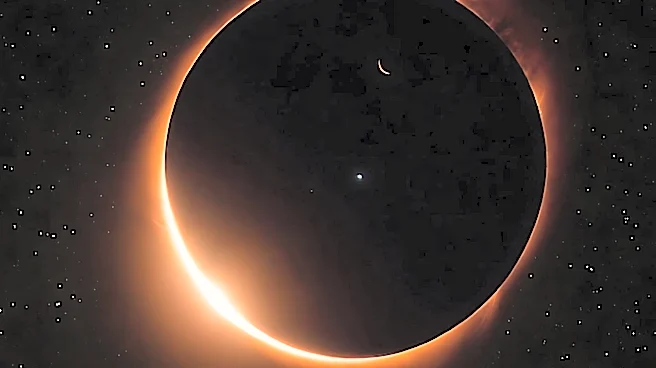
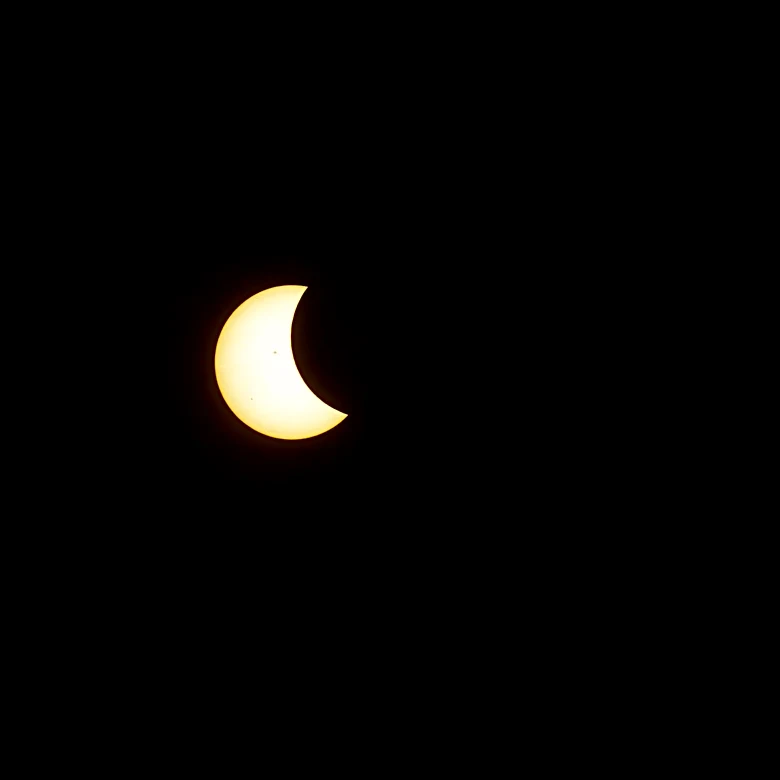
The upcoming total solar eclipse on August 12, 2026, will provide valuable opportunities for scientific research, despite the advancements in solar probes. Scientists will travel to locations such as Greenland, Iceland, and Spain to observe the eclipse and study
the sun's corona. The event allows for cost-effective research, enabling scientists to conduct experiments without the need for expensive space missions. Projects like the Nationwide Eclipse Ballooning Project will study atmospheric responses, while high-altitude aircraft will measure coronal light.
Why It's Important?
Total solar eclipses remain crucial for scientific exploration, offering a rare chance to study the sun's inner corona and atmospheric effects. These events allow researchers to test new ideas and gather data that can enhance our understanding of solar and atmospheric dynamics. The eclipse also provides an opportunity for public engagement and education, fostering interest in astronomy and space science.