








What's Happening?
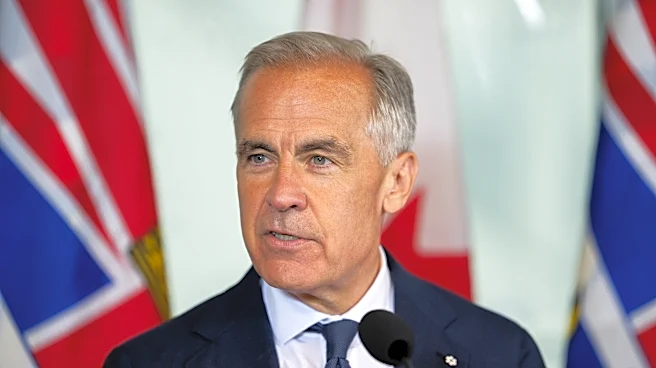
Canada has announced plans to construct a new oil pipeline from Alberta to the Pacific coast, aimed at increasing export capacity to Asia and reducing reliance on the United States. Prime Minister Mark Carney, alongside Alberta Premier Danielle Smith,
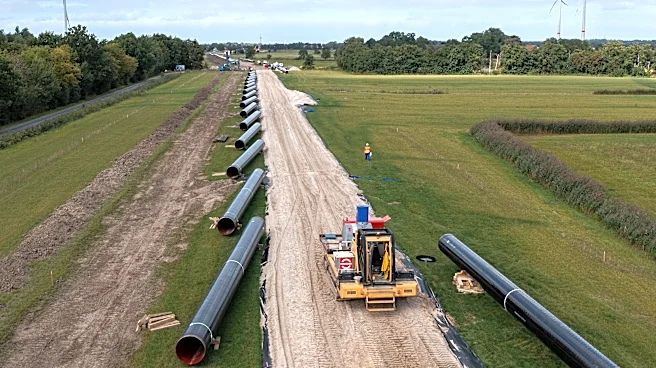
revealed that the pipeline, capable of transporting one million barrels per day, is set to begin construction in September 2027. This initiative is part of Canada's strategy to balance environmental goals with economic needs, especially in light of U.S. tariffs under President Trump. The pipeline will be built by Trans Mountain Corp and Pembina Pipeline Corporation, with the federal and Alberta governments as majority owners. The project is expected to enhance Canada's position as a global energy supplier, particularly as Asian countries seek alternatives to Middle Eastern oil.
Why It's Important?
The new pipeline represents a significant shift in Canada's energy export strategy, potentially positioning the country as a major supplier to Asian markets. This move could diversify Canada's oil export destinations, reducing economic dependence on the U.S. and potentially stabilizing the Canadian oil industry against geopolitical tensions. The project also highlights the ongoing challenge of balancing environmental concerns with economic growth, as it involves negotiations with Indigenous communities and commitments to carbon capture initiatives. The pipeline could stimulate economic growth in Alberta, a region heavily reliant on the oil industry, while also addressing environmental and regulatory challenges that have historically hindered pipeline projects in Canada.
What's Next?
The project is pending regulatory approval, with the provincial government having submitted it for potential fast-tracking. The construction phase is expected to face scrutiny from environmental groups and Indigenous communities, which could influence the timeline and execution of the project. Additionally, the Canadian government is working on agreements to support infrastructure upgrades and carbon capture projects, which are crucial for the pipeline's approval and operation. The outcome of these negotiations and regulatory processes will determine the project's future and its impact on Canada's energy sector.