




What's Happening?
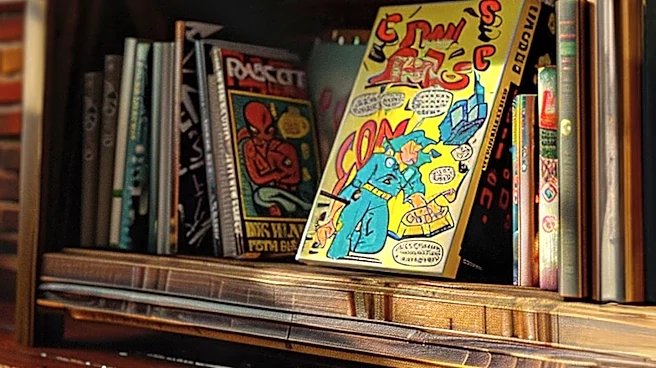
A dispute has emerged between Rachel Hope Cleves, a history professor, and cartoonist Tillie Walden regarding Walden's new graphic novel, 'Charity and Sylvia.' Cleves, author of the 2014 book 'Charity and Sylvia: A Same-Sex Marriage in Early America,'
claims Walden's graphic novel bears troubling similarities to her own work, including the title, cover imagery, and structure. Both books tell the story of Charity Bryant and Sylvia Drake, a 19th-century Vermont couple acknowledged as married in their community. Cleves alleges insufficient acknowledgment of her extensive research, which she believes Walden relied upon. Walden, however, defends her research, highlighting differences in the substance and purpose of the two texts and providing a website listing her sources. The controversy, largely playing out on social media, has revealed a divide between professional historians and general readers, with scholars often siding with Cleves and Walden's supporters emphasizing her artistic independence and the graphic novel's distinct nature.
Why It's Important?
This controversy highlights critical issues within the academic and publishing worlds concerning intellectual property, originality, and the popularization of historical narratives. For historians, it underscores the importance of proper attribution and the recognition of foundational research, especially when a new work draws heavily from existing scholarship. The debate also touches on the challenges of adapting academic research for broader audiences, particularly through mediums like graphic novels, and the potential for such adaptations to overshadow original scholarly contributions. The differing perspectives—Cleves's concern about her work being superseded versus Walden's defense of artistic interpretation—reflect a broader tension between academic rigor and creative freedom. This discussion is crucial for establishing norms around how historical stories are retold and ensuring that the labor of original research is appropriately credited, impacting future collaborations and adaptations of historical subjects.
What's Next?
The immediate future of this controversy will likely continue to unfold in public discourse, particularly on social media and within academic and literary circles. While Cleves cannot copyright a title, the discussion around acknowledgment and originality may influence publishing practices and author agreements for historical adaptations. This incident could prompt publishers and creators to be more explicit about source material and acknowledgments in works derived from existing historical research. It may also lead to increased scrutiny of how historical narratives are presented to the public, encouraging a more transparent approach to the research and creative processes. The ongoing dialogue could also shape how academic institutions and professional organizations address issues of intellectual property and collaboration between scholars and artists.
Beyond the Headlines
The deeper implications of this dispute extend to the very nature of historical ownership and accessibility. The question of 'who owns history' becomes central when academic research is reinterpreted for a popular audience. While graphic histories can make complex subjects accessible and engaging for new generations, this case raises ethical questions about the balance between popularization and scholarly integrity. It also touches on the evolving landscape of publishing, where the desire for accessible content can sometimes lead to conflicts over intellectual lineage. The controversy reflects a broader societal discussion about how knowledge is created, disseminated, and credited in an increasingly interconnected and media-rich environment, potentially influencing future guidelines for adapting non-fiction works into different formats and for different audiences.