






What's Happening?
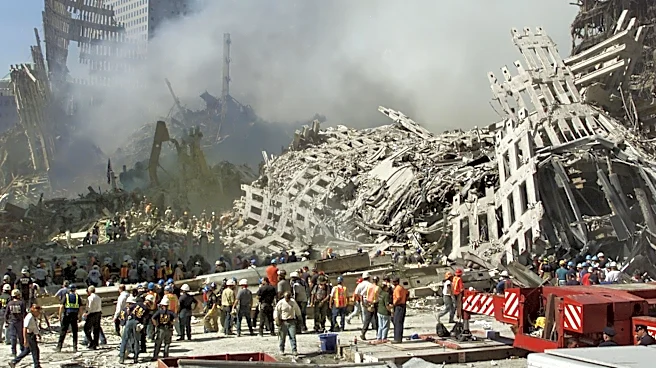
A Brooks Brothers store located at One Liberty Plaza, adjacent to the World Trade Center, was utilized as a makeshift morgue following the September 11, 2001, terrorist attacks. According to Michael Bastian, Brooks Brothers creative director, the men's
shirt department of the store was transformed into a holding area for human remains recovered from the World Trade Center rubble. These remains were kept there until they could be transferred to the New York City's Office of the Chief Medical Examiner for identification. The store, which had previously been a place where job candidates would prepare for interviews in the Twin Towers, sustained significant damage when the towers collapsed. Despite the damage, the location reopened exactly one year after the attacks. The store eventually closed in 2018 due to planned renovations and relocated a few blocks away. Bastian, who was flying back from Paris on 9/11 and landed in Nova Scotia due to the national ground stop, still finds it difficult to look at images from that day, emphasizing the personal impact of the event on New Yorkers and Americans.
Why It's Important?
This event highlights the profound and unexpected ways in which civilian infrastructure and businesses were impacted by the 9/11 attacks, transforming everyday spaces into critical, albeit tragic, support facilities during a national crisis. The use of a retail store as a temporary morgue underscores the overwhelming scale of the tragedy and the immediate need for resources to manage the aftermath. For Brooks Brothers, a 208-year-old brand, this incident became an indelible part of its history, linking it directly to one of the most significant events in modern U.S. history. The personal testimony of Michael Bastian, the creative director, illustrates the lasting emotional and psychological scars left on individuals and communities by the attacks, demonstrating how such events transcend their immediate physical destruction to affect collective memory and individual lives for decades. It also serves as a poignant reminder of the resilience shown by New York City and its businesses in the face of unprecedented devastation.
What's Next?
While the specific Brooks Brothers store at One Liberty Plaza is no longer operational at that exact location, the memory of its role in the aftermath of 9/11 continues to be a part of the brand's historical narrative and the broader remembrance of the attacks. As the U.S. approaches future anniversaries of 9/11, stories like this will likely continue to be shared, contributing to the ongoing national dialogue about remembrance, resilience, and the impact of terrorism. The relocation of the store and the passage of time mean that the physical site has changed, but the historical significance of its temporary transformation remains. Future discussions around the 9/11 memorial and museum, as well as educational initiatives, may continue to incorporate such personal and institutional accounts to provide a comprehensive understanding of the event's multifaceted impact.
Beyond the Headlines
The transformation of a Brooks Brothers store into a makeshift morgue reveals a deeper societal response to mass casualty events, where conventional functions of spaces are suspended to address immediate, critical needs. This act reflects a broader pattern seen in disasters, where ordinary citizens and private entities are compelled to contribute to emergency efforts in extraordinary ways. It also touches upon the ethical and psychological dimensions of dealing with human remains in non-traditional settings, highlighting the immense challenges faced by first responders and support personnel. The story underscores the concept of collective trauma and how it can embed itself within the history of institutions and the personal narratives of those connected to them. Furthermore, it serves as a testament to the adaptability and resourcefulness demonstrated by communities in crisis, turning a symbol of commerce into a place of solemn dignity and essential service during a period of profound national grief.




