



What's Happening?
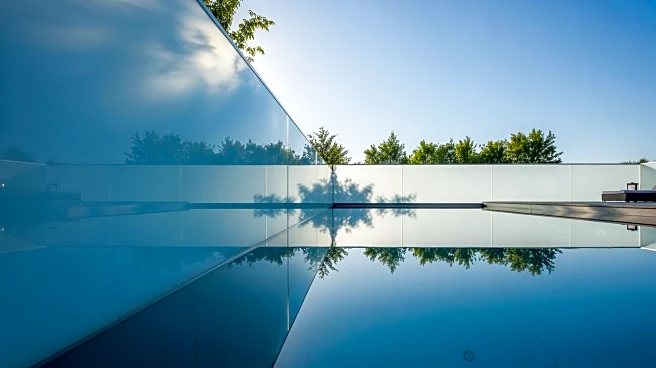
Efrat, a community in the Judean Hills, has opened a unique swimming pool featuring a mechitza, a mechanical divider that allows men and women to swim separately at the same time. This innovation caters to Orthodox Jews who require gender-segregated swimming facilities.
The pool's construction took a decade and cost NIS 40 million, funded by various sources including the Israeli lottery and local foundations. The design aims to balance religious observance with modern amenities, offering a solution for those who prioritize separate swimming. However, the pool's layout and scheduling have received mixed reactions from residents, with some praising the innovation and others expressing concerns about family accessibility and scheduling.
Why It's Important?
The introduction of the mechitza pool in Efrat represents a significant step in accommodating religious practices within modern community infrastructure. It highlights the potential for innovative solutions to meet diverse needs, promoting inclusivity while respecting religious traditions. This development could serve as a model for other communities facing similar challenges, demonstrating how religious requirements can be integrated into public amenities. The pool's success or failure could influence future projects and policies regarding religious accommodations in public spaces.
Beyond the Headlines
The mechitza pool raises broader questions about the balance between religious observance and community inclusivity. It challenges communities to consider how public spaces can be designed to respect diverse beliefs while fostering unity. The pool's implementation may prompt discussions on the role of religious accommodations in public infrastructure and the potential for similar innovations in other areas. Additionally, it highlights the ongoing negotiation between tradition and modernity in religious communities, offering insights into how these dynamics can shape community development.