



What's Happening?
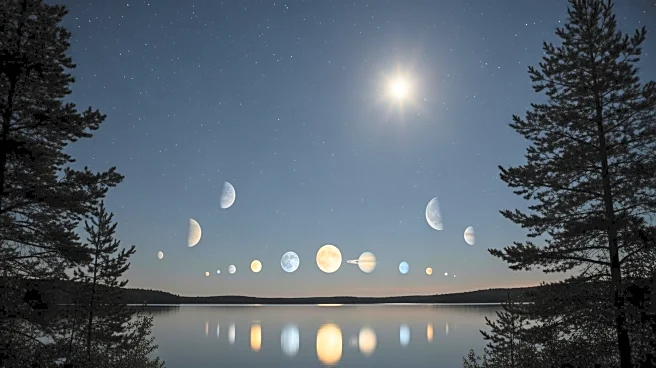
Residents of Wisconsin will have the opportunity to witness a rare celestial event known as a 'planet parade' on Saturday, February 28. According to NASA, six planets—Mercury, Venus, Neptune, Saturn, Uranus, and Jupiter—will appear in alignment along
the ecliptic line shortly after sunset. While Mercury, Venus, Saturn, and Jupiter will be visible to the naked eye, Uranus and Neptune will require a telescope or high-powered binoculars due to their dimmer appearance. The event is notable because such alignments, where multiple planets are visible simultaneously, occur only every few years. The best viewing conditions will require clear skies and an unobstructed view to the west during twilight.
Why It's Important?
This rare planetary alignment provides a unique opportunity for astronomy enthusiasts and the general public to engage with the night sky and observe celestial phenomena. Events like these can spark interest in astronomy and science, encouraging educational activities and community gatherings centered around stargazing. Additionally, such occurrences can boost local tourism in areas known for clear night skies, as people may travel to optimal viewing locations. The event also highlights the importance of preserving dark sky areas free from light pollution, which can hinder the visibility of such celestial events.
What's Next?
As the date approaches, local weather forecasts will play a crucial role in determining the visibility of the planet parade. Enthusiasts and amateur astronomers are likely to prepare by selecting viewing locations known for minimal light pollution, such as state parks and rural areas. Community events or gatherings may be organized to facilitate group viewing experiences. Additionally, educational institutions might use this opportunity to host workshops or lectures on planetary science and astronomy, further engaging the public in scientific exploration.