






What's Happening?
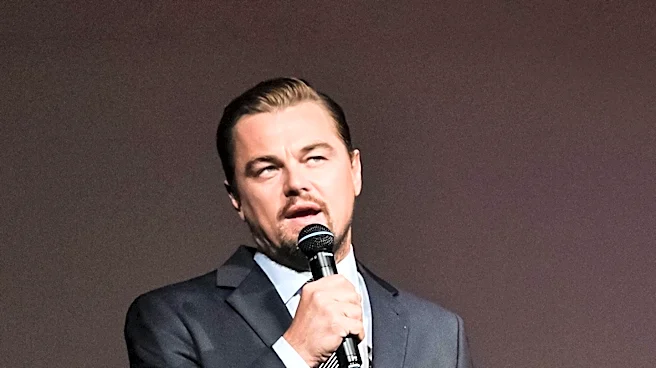
Leonardo DiCaprio recently lauded the Indonesian government for its decision to redirect agricultural expansion to 'degraded land' instead of clearing nearly two million hectares of primary forest in South Papua’s Merauke food estate. This endorsement
was quickly highlighted by Indonesia's Presidential Special Envoy for Climate and Energy, Hashim Djojohadikusumo, as proof of the nation's environmental leadership. However, this praise comes amidst significant concerns regarding Indonesia's deforestation rates. In 2025, Indonesia lost 433,751 hectares of forest, a 66% increase from the previous year and the highest level in eight years, according to satellite data from Auriga Nusantara. During the first ten months of 2026, fires burned 2.88 million hectares, surpassing the catastrophic 2019 season and causing transboundary haze. Critics argue that the 'degraded land' pledge is a 'semantic laundering' tactic, as there is no internationally agreed definition of degraded land, and Indonesia's classifications can be revised at will, potentially allowing for the conversion of ecologically valuable areas.
Why It's Important?
This situation highlights a critical tension between international environmental advocacy and on-the-ground realities in Indonesia. While celebrity endorsements can draw global attention to environmental issues, critics argue that they can also inadvertently legitimize policies that may not lead to genuine conservation. The surge in deforestation and fires, despite pledges, indicates that underlying legal and economic drivers of environmental destruction remain unaddressed. The 2020 Omnibus Law on Job Creation, which weakened environmental protections by repealing requirements for forest cover and strict liability provisions for corporations, is cited as a major contributor. This legal framework, which critics say 'manufactures legality' for deforestation, undermines conservation efforts and raises questions about the effectiveness of international climate finance and carbon markets in achieving real environmental outcomes.
What's Next?
The effectiveness of Indonesia's 'degraded land' pledge will depend on its implementation and the transparency of its definitions. Environmental organizations like WALHI have noted that the government has not released specific locations for proposed agricultural projects or reassessment results, and forest clearing continues. International scrutiny will likely intensify, particularly from organizations monitoring deforestation and carbon emissions. The international community, including donors like Norway, which has provided significant climate finance, may face pressure to condition future support on more tangible and verifiable environmental protections, such as the repeal of problematic legal provisions. The ongoing debate will likely focus on the need for independent, transparent, and ecologically rigorous criteria for 'degraded land' and stronger enforcement of environmental regulations.
Beyond the Headlines
This scenario exposes deeper issues within global environmental governance, where symbolic gestures and financial incentives may not translate into effective conservation without fundamental legal and policy reforms. The concept of 'degraded land' itself becomes a battleground, with its definition holding significant implications for land use and biodiversity. The incident also raises questions about the role of celebrity advocacy, suggesting that while it can raise awareness, it may inadvertently provide cover for insufficient environmental action if not coupled with rigorous scrutiny of policy details. The long-term implications include the continued loss of critical ecosystems, increased carbon emissions, and the potential for greenwashing to undermine genuine efforts to combat climate change and biodiversity loss. It underscores the need for a more critical and nuanced approach to evaluating environmental commitments from nations.