






What's Happening?
U.S. Senator Peter Welch (D-Vt.), a member of the Senate Judiciary Subcommittee on Intellectual Property, has joined Senator Chris Van Hollen (D-Md.) and 15 other Senate Democrats in urging President Trump to negotiate a formal agreement with Chinese
President Xi Jinping regarding guardrails and global standards for the development, testing, and use of frontier Artificial Intelligence (AI) models. The senators' letter emphasizes the need for international cooperation to mitigate the risks associated with advanced AI, including potential cyberattacks, the development of biological weapons, and other activities that could threaten humanity. They also suggested considering a mutual pause in frontier AI development between the U.S. and China to prevent these dangers. The senators stressed that while the U.S. leads in AI innovation, it must also lead in AI safety and international cooperation, starting with serious engagement between the Trump Administration and China.
Why It's Important?
This bipartisan call for AI guardrails with China highlights a critical and emerging area of U.S. foreign policy and national security. The rapid advancement of AI technology, particularly frontier models, presents both immense opportunities and significant risks, including the potential for misuse in warfare, surveillance, and destabilizing cyber operations. Without international cooperation and agreed-upon standards, there is a heightened risk of an AI arms race, which could lead to unforeseen global consequences. Engaging China, a major player in AI development, is crucial for establishing effective global norms. This initiative underscores the recognition that AI safety is not merely a domestic issue but a global imperative that requires diplomatic solutions. The proposed mutual pause in AI development reflects a deep concern among lawmakers about the pace of technological progress outstripping regulatory and ethical frameworks, aiming to create a window for establishing necessary safeguards before potential catastrophic events occur. This effort could shape the future of international technology governance and global stability.
What's Next?
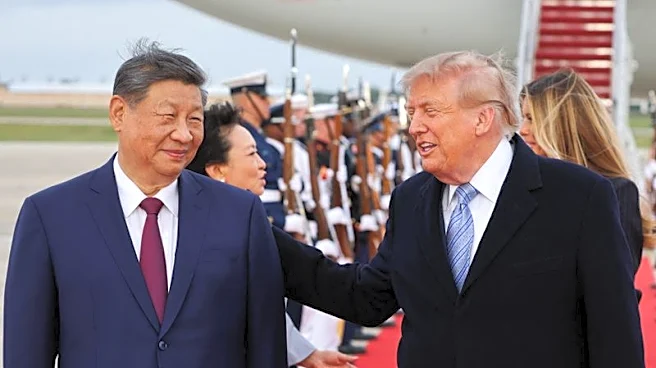
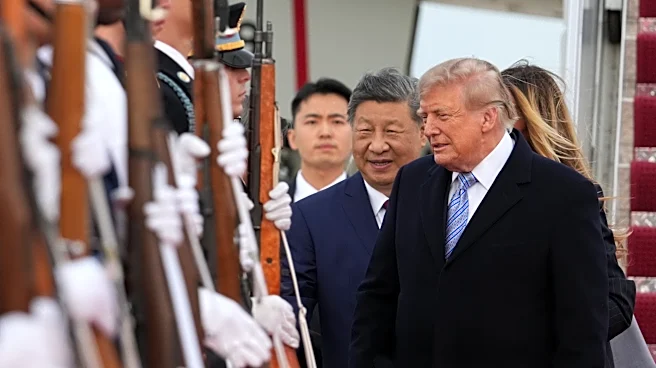
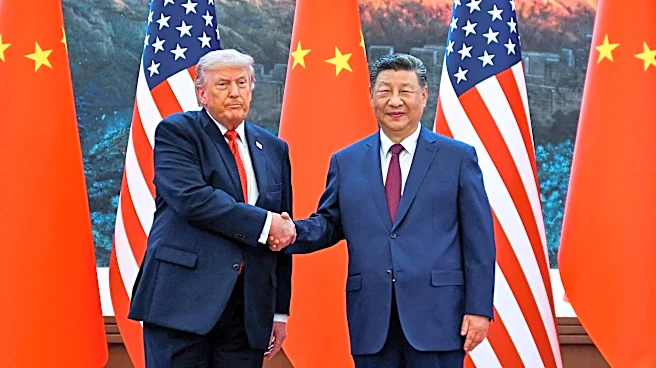
The senators' letter serves as a direct appeal to President Trump to prioritize AI guardrail negotiations during his upcoming summit with Chinese President Xi Jinping. The immediate next step would be for the Trump Administration to consider and potentially act on this recommendation, integrating AI safety discussions into high-level diplomatic engagements with China. If negotiations proceed, they would likely focus on establishing common standards for AI development and deployment, oversight mechanisms, and verification protocols to ensure compliance. However, achieving a formal agreement on such a complex and strategically vital technology between two global powers like the U.S. and China will be challenging, given existing geopolitical tensions and differing national interests. The proposal for a mutual pause in AI development is particularly ambitious and would require significant trust and commitment from both sides. The outcome of these discussions, or lack thereof, will significantly influence the trajectory of global AI governance and the potential for future international cooperation or competition in this critical technological domain.
Beyond the Headlines
The push for AI guardrails with China transcends immediate policy concerns, touching upon profound ethical and philosophical questions about humanity's control over advanced technology. The senators' emphasis on preventing "cyberattacks, the development of biological weapons, and other dangerous activities that could threaten humanity" highlights the existential risks associated with unchecked AI development. This initiative reflects a growing awareness that AI, unlike previous technologies, has the potential to fundamentally alter human society and even human existence. The call for a mutual pause in frontier AI development, while perhaps idealistic, underscores a deep-seated concern about the rapid, often opaque, progress in this field and the potential for unintended consequences. This debate forces a re-evaluation of the traditional pursuit of technological dominance versus the imperative of global safety and ethical responsibility. It also brings to the forefront the challenge of governing technologies that evolve faster than legislative and diplomatic processes, prompting a broader societal conversation about the kind of future we want to build with AI and the necessary international frameworks to ensure its responsible development.