



What's Happening?
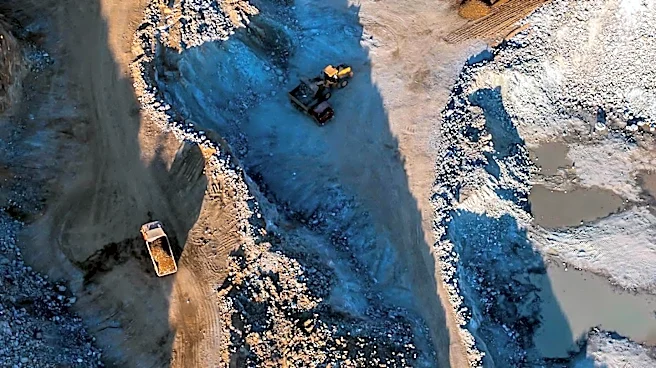
The Arizona Department of Environmental Quality (ADEQ) has approved a request from Energy Fuels Resources Inc. to increase the permissible arsenic levels in a monitoring well at a uranium mine near the Grand Canyon. This decision raises the alert level from 0.04
mg/L to 0.05 mg/L and the allowable arsenic concentration from 0.05 mg/L to 0.055 mg/L. The mine, located within a national monument, has been detecting rising arsenic levels since 2025, exceeding permitted alert levels multiple times. Local tribes and environmentalists argue that this decision threatens regional water quality and public health. Independent hydrogeologists have expressed concerns that the contamination could spread across the regional aquifer, necessitating further study before increasing permissible arsenic levels.
Why It's Important?
The decision to raise arsenic limits at the uranium mine has significant implications for environmental and public health. The mine's proximity to the Grand Canyon and its location within a national monument heighten concerns about potential contamination of a critical water source. The Havasupai Tribe, whose reservation relies on the aquifer, views the decision as a threat to their water supply and cultural heritage. The move also sets a precedent for regulatory agencies potentially allowing increased contaminant levels, which could undermine environmental protections. This situation highlights the ongoing tension between economic interests in mining and the need to safeguard natural resources and public health.
What's Next?
The ADEQ's decision may face challenges from environmental groups and local tribes, who could seek legal action to prevent the implementation of the new arsenic limits. Further studies by the U.S. Geological Survey and Environmental Protection Agency may be conducted to assess the potential spread of contamination. The outcome of these studies could influence future regulatory decisions and public policy regarding mining operations near sensitive environmental areas. Additionally, the decision may prompt broader discussions about the balance between resource extraction and environmental protection in the region.
Beyond the Headlines
The approval to raise arsenic limits at the mine reflects broader regulatory challenges in managing the environmental impacts of resource extraction. It underscores the need for comprehensive environmental assessments and transparent decision-making processes that involve affected communities. The situation also highlights the historical context of uranium mining in the region, where Indigenous communities have borne the brunt of environmental and health impacts. This case may serve as a catalyst for revisiting regulatory frameworks to ensure they adequately protect vulnerable ecosystems and communities.