



What's Happening?
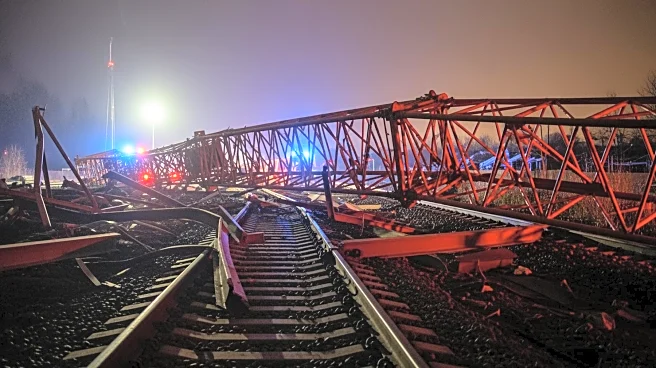
A construction crane fell onto a moving passenger train in Nakhon Ratchasima province, Thailand, causing a derailment and fire that resulted in at least 30 fatalities and numerous injuries. The train, traveling from Bangkok to Ubon Ratchathani, was part
of a high-speed rail project intended to connect China with Southeast Asia. The crane was being used to build an elevated railway segment when it collapsed onto the train, leading to the disaster. Rescue operations are ongoing, with authorities investigating the incident. The project is a joint venture between Thai and Chinese companies, with Italian-Thai Development as the main contractor.
Why It's Important?
This incident highlights significant safety concerns in large infrastructure projects, particularly those involving international partnerships. The high-speed rail project is a key component of China's Belt and Road Initiative, aiming to enhance connectivity across Asia. The accident could lead to increased scrutiny of construction practices and safety standards, potentially affecting future projects and international collaborations. The involvement of major contractors like Italian-Thai Development, which has faced previous controversies, underscores the need for stringent oversight in such ventures.
What's Next?
Authorities have launched an investigation to determine the cause of the crane collapse and assess the responsibilities of the involved parties. Legal actions against the contractor are being considered, and the incident may prompt a review of safety protocols in ongoing and future infrastructure projects. The Thai government, along with Chinese partners, will likely face pressure to ensure the safety and reliability of the high-speed rail network, which is crucial for regional economic integration.