


What's Happening?
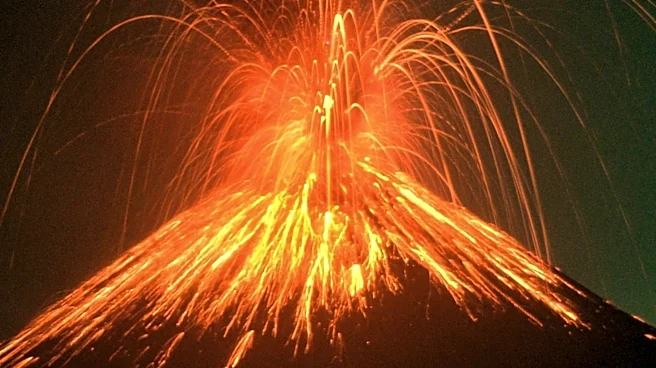
A study led by The University of Manchester has uncovered that superheated magma plays a crucial role in determining the nature of volcanic eruptions. By analyzing magma from the 2021 Tajogaite eruption on La Palma, Spain, researchers found that superheating
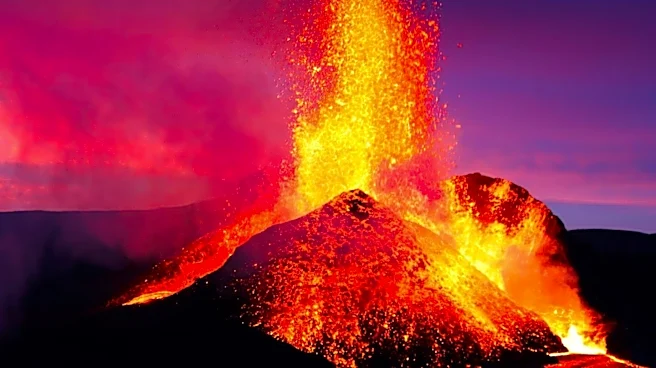
can delay crystal formation, affecting the magma's ascent and eruption style. This process, where magma becomes hotter than the temperature at which crystals remain stable, can lead to dramatic lava fountains or slower lava flows depending on the crystallization delay. The study utilized advanced techniques like synchrotron X-ray microtomography to observe these processes in real-time, providing new insights into volcanic behavior.
Why It's Important?
Understanding the role of superheated magma in volcanic eruptions is significant for improving volcanic hazard assessments and eruption forecasts. The findings suggest that the thermal history of magma, alongside its chemical composition and gas content, is vital in predicting eruption dynamics. This knowledge could enhance the accuracy of monitoring systems and help mitigate risks associated with volcanic activity. The research also contributes to the broader scientific understanding of geological processes, potentially informing future studies on magma behavior and its implications for volcanic regions worldwide.