








What's Happening?
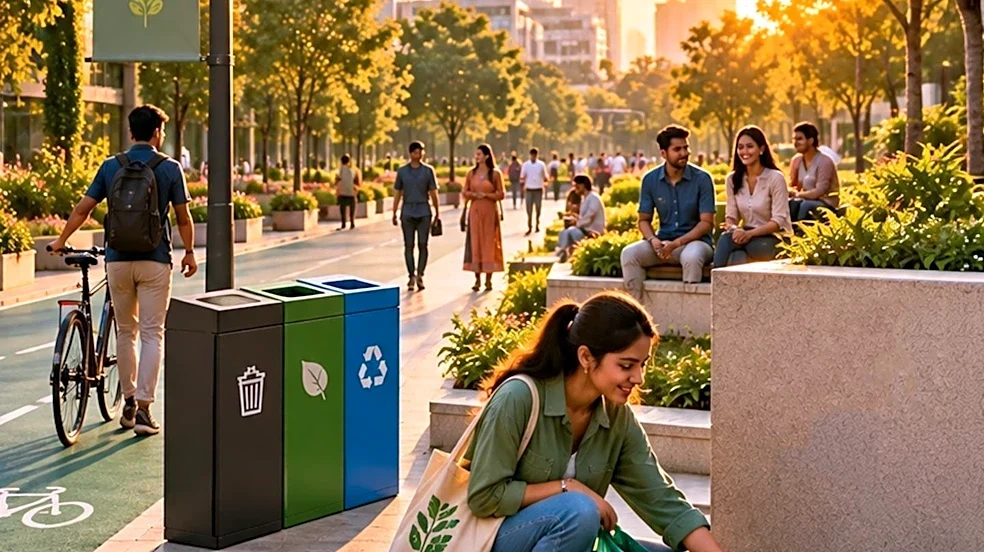
A new neighborhood in Toronto, named Ookwemin Minising, is adopting an innovative urban design strategy that prioritizes green infrastructure for stormwater management and increased green space. Instead of traditional urban planning that carves out parks,
this design integrates green elements directly into the streetscape. The main street will be car-free, functioning as a linear park, and the neighborhood will feature 400 trees. Other streets will allow cars but will incorporate large swaths of green space. This approach aims to reduce urban heat, support biodiversity, and capture rainwater during storms. The design eliminates street parking to make room for plantings and seating areas, with trees extending deeper into the road to slow down traffic. The 'Sandbar Trail' on one street, following a former sandbar, will be filled with plants and a natural mix of tree species. The streets are gently sloped to guide water toward bioswales, which are plant-filled channels designed to absorb rainwater, providing a 'sponge' approach to street design. While traditional sewers are still in place, nature is intended to capture and store water first.
Why It's Important?
This innovative urban design in Toronto offers a significant model for U.S. cities grappling with similar challenges of urban density, stormwater management, and climate resilience. The integration of green infrastructure directly into street design, rather than as separate parkland, demonstrates a scalable solution for maximizing green space in increasingly dense urban environments. By prioritizing nature-led solutions, cities can simultaneously address multiple issues: mitigating the urban heat island effect, enhancing local biodiversity, and improving water quality by reducing runoff into traditional sewer systems. The 'sponge' approach to street design, utilizing bioswales and extensive tree planting, provides a more resilient and sustainable method for managing stormwater, which is crucial as climate change leads to more frequent and intense rainfall events. This model could influence U.S. urban planners and policymakers to rethink conventional street design, encouraging a shift towards more integrated and ecologically beneficial infrastructure that improves public spaces and environmental health.
What's Next?
The implementation of the Ookwemin Minising neighborhood design will serve as a case study for other cities looking to adopt similar nature-led urban planning strategies. As the project progresses, its effectiveness in managing stormwater, reducing urban heat, and fostering biodiversity will be closely monitored. Success in Toronto could lead to increased interest and adoption of these methods in U.S. cities, particularly those facing significant climate-related challenges such as flooding and extreme heat. Urban planners, engineers, and environmental advocates in the U.S. will likely analyze the long-term performance and cost-effectiveness of this integrated green infrastructure. This could influence future urban development policies, zoning regulations, and funding allocations for sustainable infrastructure projects across the United States. The project may also inspire further research into the optimal design and plant selection for bioswales and other green stormwater infrastructure in various climatic conditions.
Beyond the Headlines
The Ookwemin Minising project represents a deeper philosophical shift in urban development, moving beyond merely accommodating nature to integrating it as a foundational element of city planning. This approach challenges the traditional separation of infrastructure from ecological systems, proposing a more symbiotic relationship where urban spaces actively contribute to environmental health. Ethically, it underscores a commitment to creating healthier, more livable cities for residents by prioritizing green spaces and natural processes. Culturally, it could foster a greater appreciation for urban nature and encourage more active engagement with public spaces. The long-term implications include a potential redefinition of what constitutes 'development,' shifting from purely economic growth to a more holistic understanding that includes ecological and social well-being. This model could also influence legal frameworks around urban planning, potentially leading to new mandates for green infrastructure in new developments and retrofits, ultimately shaping the future of sustainable urban living in North America.