







What's Happening?
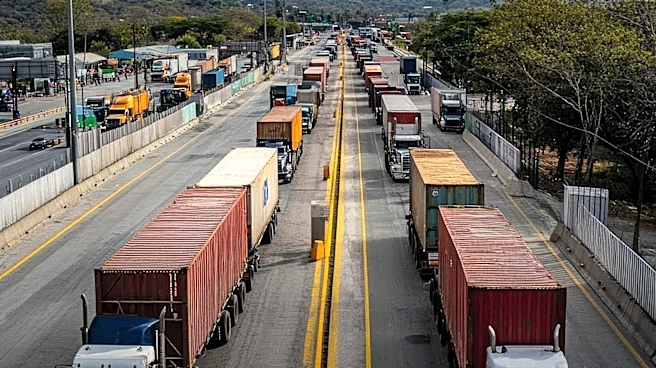
A nationwide strike by goods transporters and oil tankers in Pakistan has begun to disrupt industrial and export supply chains. The strike, led by the Pakistan Goods Transporters Alliance, is in response to the government's daily fuel price mechanism
and other grievances. The movement of over 400,000 goods-carrying vehicles has been suspended, affecting the transportation of raw materials and finished goods. The transporters are demanding a return to a monthly fuel price mechanism and a reduction in withholding tax. Talks with government officials are scheduled for Monday, and the strike will continue until an agreement is reached.
Why It's Important?
The strike poses a significant threat to Pakistan's industrial sector, which is already struggling with high production costs. Prolonged disruption could halt production, jeopardize export commitments, and lead to financial stress for industries. The situation highlights the critical role of transportation in maintaining supply chains and the potential economic impact of unresolved disputes between transporters and the government. The outcome of the talks could set a precedent for future negotiations and policy adjustments in the transportation sector.
What's Next?
The government is expected to engage in negotiations with the transporters on Monday. The resolution of the strike will depend on the government's willingness to address the transporters' demands, including the fuel price mechanism and tax reductions. If the strike continues, it could lead to further economic disruptions, affecting employment and the overall economy. The industrial sector is urging the government to act swiftly to prevent a collapse of the supply chain.