





What's Happening?
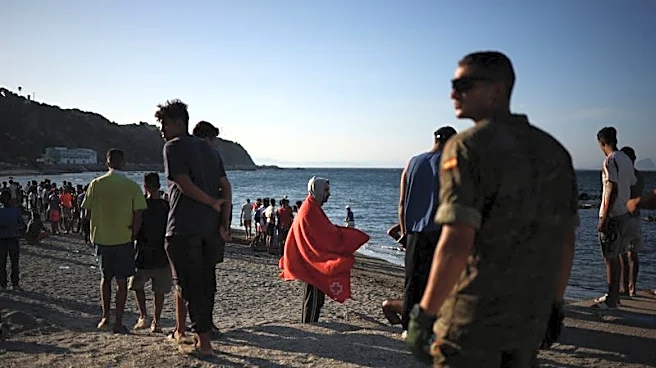
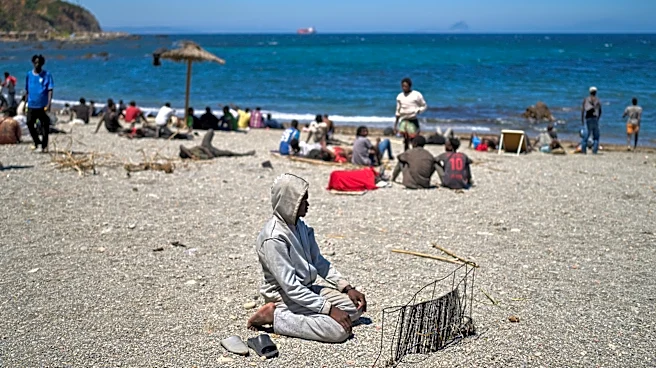
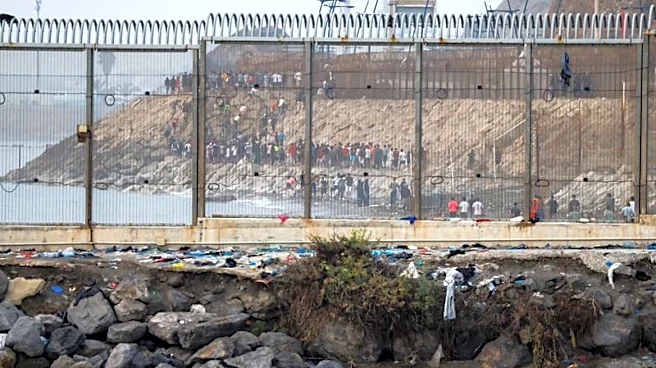
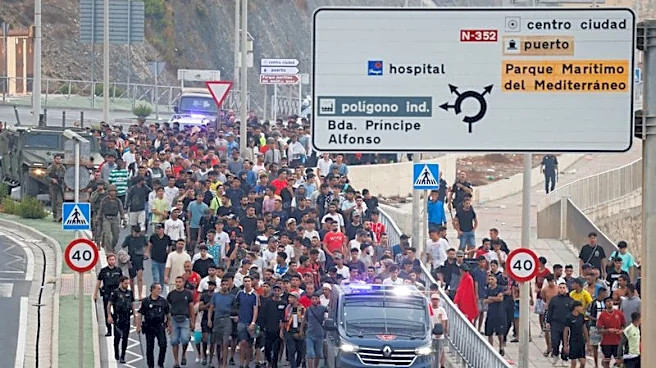
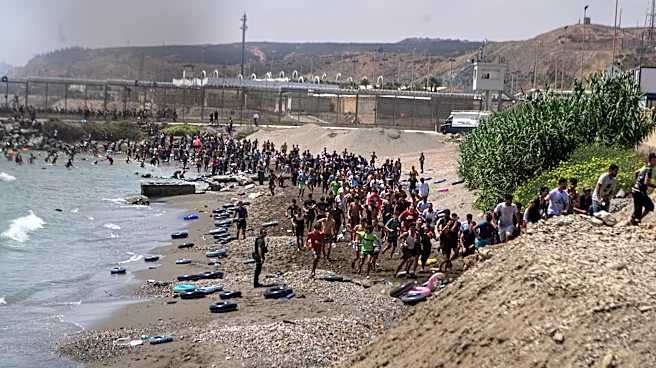
EU interior ministers are set to meet to discuss the migration crisis in Ceuta, where approximately 60,000 non-EU nationals crossed into the Spanish enclave from Morocco in a single day. The unprecedented mass crossing has prompted European governments
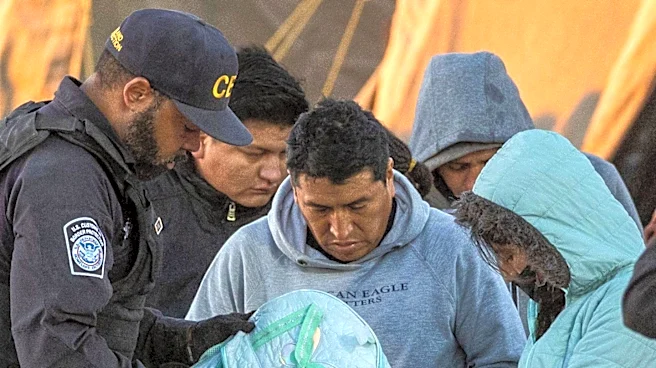
to consider reintroducing internal border controls and enhancing the role of Frontex, the EU's border agency, during emergencies. The situation in Ceuta, located on the African continent, has sparked strong reactions across Europe, with 22 governments calling for a coordinated response. The ministers are exploring measures to safeguard public order and address risks from secondary movements, potentially leading to temporary internal border controls under the Schengen Borders Code.
Why It's Important?
The Ceuta migration crisis highlights the challenges Europe faces in managing irregular migration and maintaining border security. The potential reintroduction of internal border controls could impact the Schengen Area's principle of free movement, affecting travel and trade within the EU. The crisis underscores the need for a unified European approach to migration, balancing security concerns with humanitarian obligations. The situation also raises questions about the effectiveness of current border management strategies and the role of Frontex in addressing large-scale migration events. The outcome of the ministers' meeting could set a precedent for future responses to similar crises.
What's Next?
If internal border controls are reintroduced, EU member states will need to navigate the legal and logistical challenges of implementing selective checks while maintaining the integrity of the Schengen Area. The ministers' decision could influence future EU migration policies and the role of Frontex in crisis management. The situation may also prompt discussions on strengthening external border controls and enhancing cooperation with non-EU countries to address the root causes of migration. The EU's response will be closely watched by member states and international observers, as it could impact the region's approach to migration and border security.